
October 9, 2025 · 4 min read
Boston, Massachusetts
By the Credence Charter Bus team
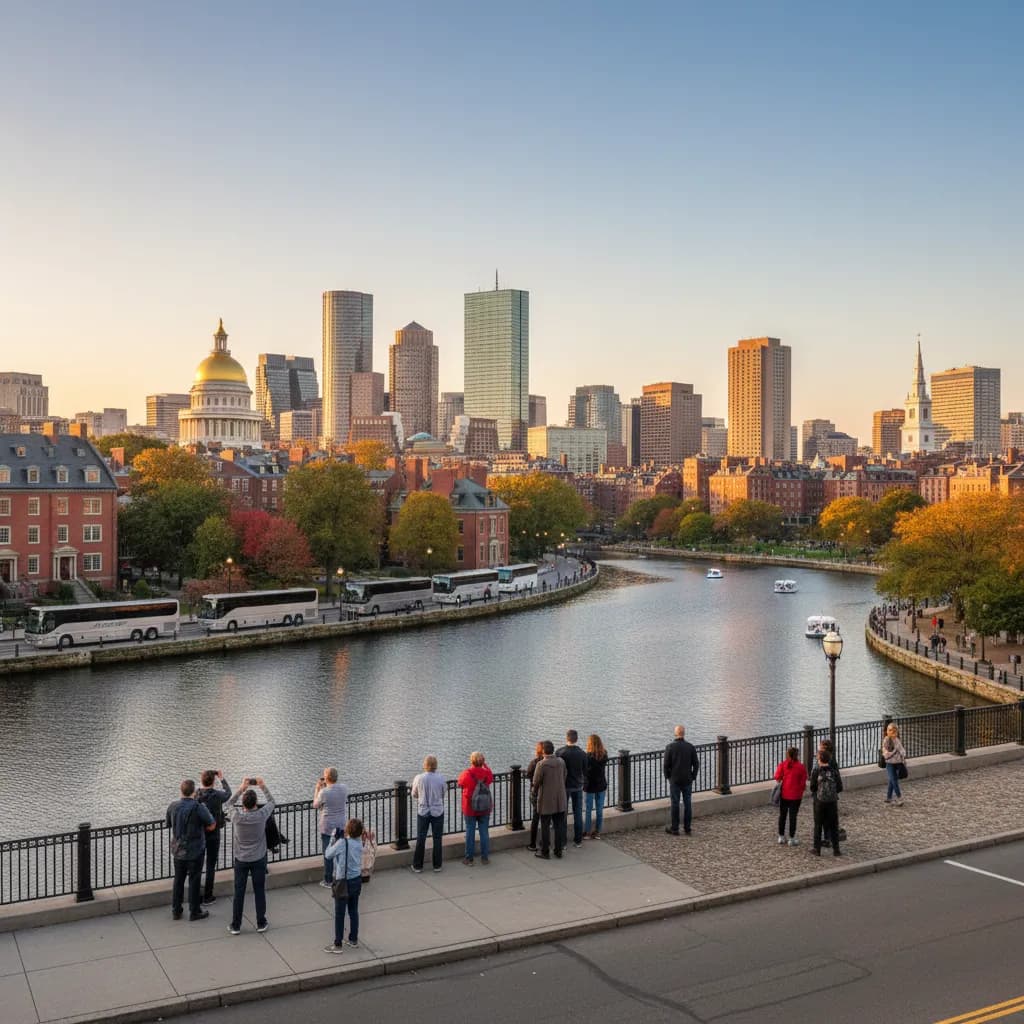
Boston's street plan predates the automobile by roughly two centuries, and it shows. The city is compact, walkable and genuinely rewarding on foot, which is exactly why a charter bus in Boston works so well: the vehicle does the long moves between neighborhoods, and the group walks the parts worth walking.
The road your driver must not take
Storrow Drive and Memorial Drive have low stone overpasses, and every year a truck or bus that ignored the warnings gets peeled open on one. Locals call it getting Storrowed. Both roads are prohibited to buses, and a driver unfamiliar with Boston who follows a phone's routing straight onto Storrow is a genuine hazard.
This is the strongest argument for using an operator whose drivers know the city rather than the cheapest available quote. Ask directly whether the assigned driver has run Boston before. It is a fair question and the answer tells you a lot.
Where a coach can actually stop
Boston has designated motorcoach parking and drop-off zones near the major attractions, and downtown hotels are practiced at loading groups. What does not work is a coach waiting on a narrow street in the North End or idling near Faneuil Hall while a group shops.
Build the day as a series of drop-offs and confirmed collection times with the vehicle parked properly in between. Traffic is the other constraint — crossing the city at rush hour can take three times what it takes mid-morning, so put the outlying stop early.
The Freedom Trail, done sensibly
The trail runs two and a half miles from Boston Common to the Bunker Hill Monument, marked by a red brick line in the pavement. Walking all of it takes a group most of a day once you stop at anything.
The efficient version for a group: walk the downtown half from Boston Common through the Granary Burying Ground, the Old State House and Faneuil Hall, then have the coach collect you and carry the group across the river to Charlestown for the USS Constitution and Bunker Hill. That skips the least interesting stretch and saves an hour of walking for people who will have had enough by then.
The other stops worth a group's time
- Boston Tea Party Ships and Museum: participatory, well-run, and reliably the favorite stop for school groups.
- Fenway Park: tours run most non-game days and are excellent even for people with no interest in baseball.
- The Museum of Fine Arts or the Isabella Stewart Gardner Museum, side by side in the Fenway — the Gardner is the more memorable building by some margin.
- Harvard Yard and MIT in Cambridge, ten minutes across the river and the obvious pairing for a student group.
- The North End for dinner: Boston's Italian quarter, walkable, and where a group should eat rather than downtown.
Which charter bus suits a Boston itinerary
- Forty to fifty-six: a full-size charter bus is right for a conference group or a school trip moving as one unit between the main sites.
- Twenty to thirty-two: a mini bus is markedly easier inside the city, reaching hotel loading zones and neighborhood streets a coach cannot.
- Ten to fourteen: a sprinter van suits an executive group working between downtown offices and Logan.
- Twenty-eight to sixty: a school bus is the economical option for districts within about two hours.
Conference and offsite movement around the Seaport and Back Bay is a large part of what we run here, handled by our corporate travel team, and Logan arrivals are covered by our airport transfer service, which tracks flight numbers rather than scheduled times.
Day trips from Boston
Boston is an excellent base. Salem is thirty minutes north, Concord and Lexington about forty minutes west for the Revolutionary sites, Plymouth an hour south, and the Cape within ninety minutes. Each is far more pleasant on one vehicle than by commuter rail with a group.
One practical note on the North End: the streets there are among the narrowest in the city and a coach cannot wait on them. Drop the group at the Greenway and agree a collection point on a wider street, or the driver will spend the meal circling. It is a small piece of planning that turns the best dinner in Boston from a logistical problem into an easy one.
When to go
September and October are the best months — warm days, autumn color, and the city at its most attractive. May and June are close behind. July and August are hot, humid and busy; January and February are genuinely cold, and a walking-heavy itinerary needs rethinking in those months. Avoid the week of the Boston Marathon in April and college move-in weekends in late August unless you enjoy traffic.
Booking the trip
Send your dates, headcount, hotel and the stops you have in mind. We run pickups across Boston, Cambridge and Quincy, and request an all-in quote will usually get you an itemized price back the same day.