July 30, 2026 · 4 min read
Charter Bus Sizes: Which Seating Capacity Fits Your Group?
By the Credence Charter Bus team
Charter bus sizes run from a 10-passenger sprinter van to a 56-passenger motor coach, and picking the wrong point on that scale is the most expensive mistake in group travel — too big and you pay for empty seats, too small and someone is left arranging a second vehicle a week before departure. This guide walks the full range of seating capacities, what rides along at each size, and the simple rules that match a vehicle to a headcount the first time.
Charter bus sizes at a glance
- Motor coaches — 50 to 56 passengers, the full-size standard for long trips
- Coach buses — 40 to 45 passengers, full comfort at a mid-large size
- Mini buses — 20 to 32 passengers, the shuttle and day-trip workhorse
- Sprinter vans — 10 to 14 passengers, executive comfort for small groups
- School buses — 28 to 60 passengers, the budget classic for short hauls
- Party buses — 14 to 40 passengers, perimeter seating built for celebration
- Stretch limousines — up to 10 · luxury SUVs — up to 7 · executive sedans — up to 4
The 56-passenger motor coach: the full-size standard
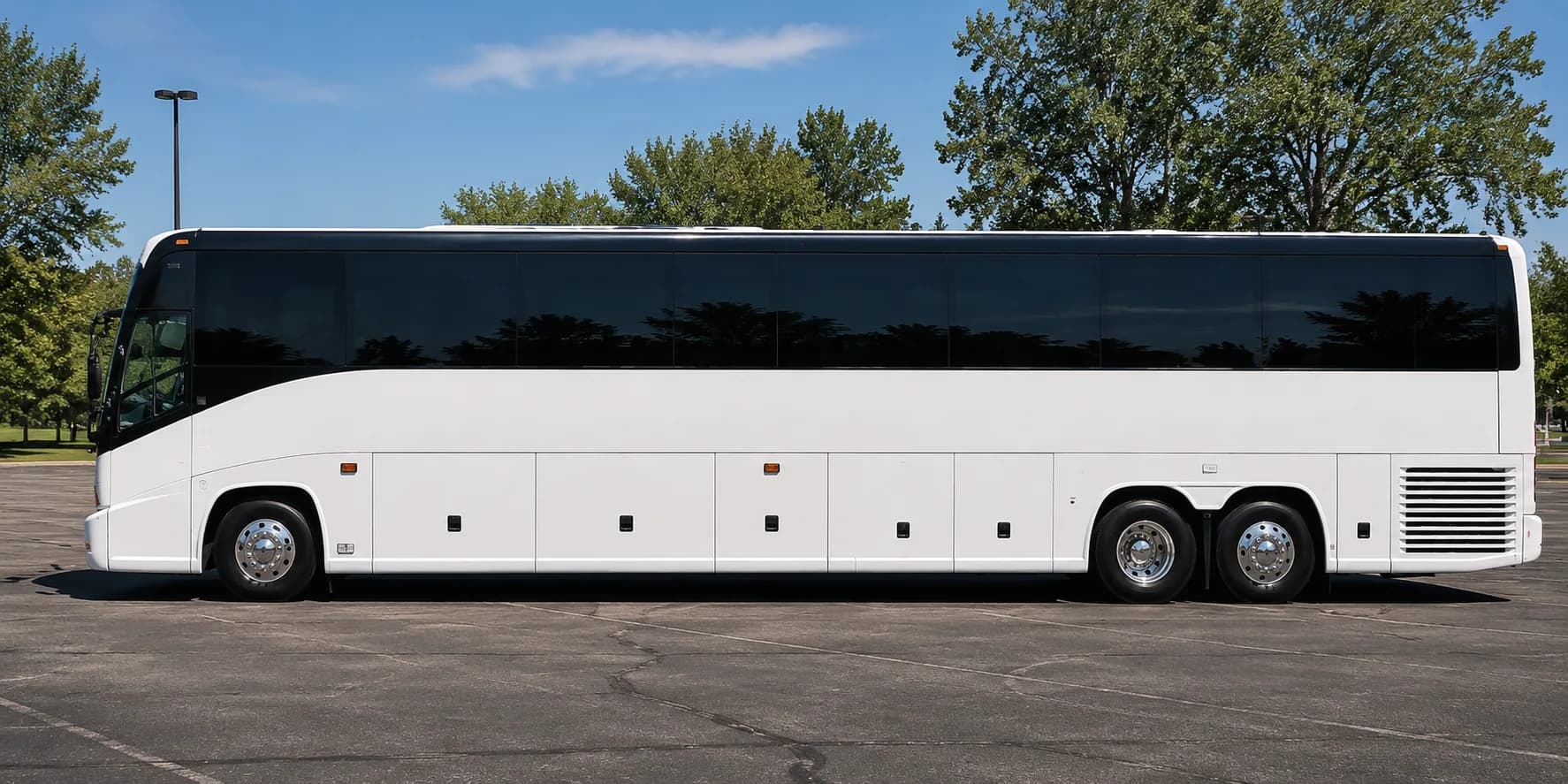
When people picture a charter bus, they picture a full-size motor coach: 50 to 56 reclining high-back seats on a raised deck, underfloor bays that swallow a week of luggage, and the amenities that make distance disappear — Wi-Fi, power outlets, climate control, and an on-board restroom. That restroom matters more than it sounds: on a highway run it is the difference between one meal stop and four time-eating detours. For interstate and multi-day trips, this is the vehicle we quote first.
40 to 45 passengers: the mid-size coach bus
A coach bus carries 40 to 45 passengers with the same reclining seats, Wi-Fi, and underfloor luggage space as its bigger sibling. It exists for the group that would rattle around a 56-seat coach half empty — you keep the comfort that matters on a longer ride while paying for a vehicle matched to your actual headcount. Church groups, mid-size companies, and regional day trips live in this range.
20 to 32 passengers: the mini bus
The mini bus is the most-booked size in the fleet for a reason: a 25-passenger minibus sits exactly where most real groups land. It boards fast, turns down streets a full coach cannot, fits hotel porte-cochères, and still gives every rider a comfortable forward-facing seat with Wi-Fi on board. Bags travel in the cabin or a rear compartment rather than underfloor bays, which is the one real limit — fine for day trips, tight for a touring week. For shuttle loops at weddings and conferences, nothing beats it.
10 to 14 passengers: the sprinter van
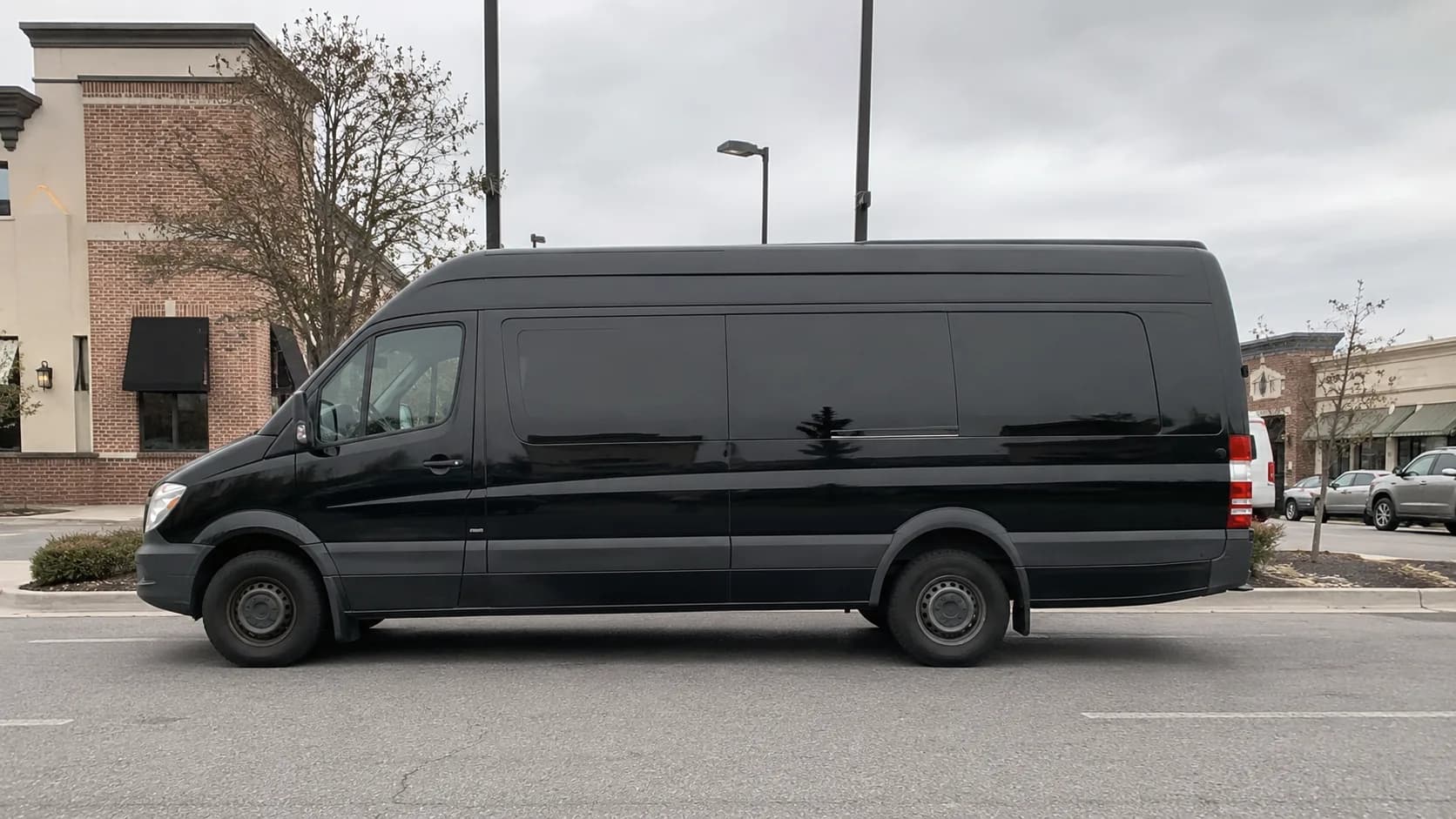
For executive teams, wedding parties, and airport transfers, a sprinter van moves 10 to 14 people in a tall, walk-in cabin with premium seating. It is quick around town, easy to park, and comfortable in a way a row of rideshares never manages. Groups that would technically fit in three SUVs almost always ride better — and cheaper — in one sprinter.
School buses, party buses, and the specialty end
Three sizes round out the fleet. The school bus (28 to 60 passengers) is the most economical way to move a big group a short distance — field trips, camp shuttles, wedding guest runs between venues. The party bus (14 to 40) trades rows for wraparound perimeter seating with a sound system, lighting, a dance floor, and a bar area, because on that trip the ride is the event. And for the smallest parties, stretch limousines seat up to 10, luxury SUVs up to 7, and executive sedans up to 4 — the arrival-in-style tier rather than the move-a-crowd tier.
Amenities: Wi-Fi, restrooms, and reclining seats
Two amenity questions decide more bookings than any other. First, connectivity: Wi-Fi rides along on our motor coaches, coach buses, mini buses, and sprinter vans, with power outlets on the full-size coaches — enough for a working bus on a corporate run. Second, the restroom: if you need a charter bus with a restroom on board, you are choosing a full-size motor coach, and on any trip past about two hours it earns the choice. Reclining seats come standard on every coach class. Each fleet page lists exactly what is on board its vehicle, so the promise you plan around is the one that shows up.
How to choose: three rules that rarely miss
- Book for riders, not invitations — count the people who will actually board, then add a two- or three-seat buffer for chaperones and late additions.
- Let distance size the vehicle upward: past two hours each way, the coach amenities stop being luxuries; overnight, the luggage bays make the decision for you.
- Between two sizes, price both. The gap is often smaller than you expect, and the comparison in our charter bus vs. mini bus guide shows which way it usually tips.
Get a size recommendation with your quote
Capacity charts narrow the choice; an itinerary settles it. Tell us your headcount, date, and route through a free quote request and we will recommend a size — and price a second option beside it if you are on a boundary. We run every vehicle class above across all 50 states, so the right size is available where your trip actually starts, and our cost guide explains what each tier tends to cost and why.