
July 26, 2026 · 4 min read
How to Rent a Charter Bus, Step by Step
By the Credence Charter Bus team

If you have never had to rent a charter bus before, the process looks opaque from the outside: no posted prices, unfamiliar vehicle names, and a quote form asking questions you have not thought about yet. In practice, booking a charter bus is simpler than booking most group hotel blocks — it just rewards showing up prepared. Here is the whole process, in order, with what to have ready at each step and the small decisions that end up protecting your budget.
Step 1: Pin down your headcount
Every other decision hangs on this number, and the most common booking mistake is inflating it. Count the people who will actually ride, not everyone who was invited — groups routinely book for the RSVP list and travel with two-thirds of it, paying for seats nobody sat in. If the number is genuinely uncertain, carry a range instead of a hope, and say so when you ask for prices. An honest range lets the operator hold the right vehicle and adjust before the balance is due.
Step 2: Sketch the itinerary — every stop
Pricing is built from time and distance, so the itinerary is the quote. Write down the pickup point, every intermediate stop, the destination, and the return, with your best guess at times. Include the stops you are only considering — it is far cheaper to price them now than to add them on trip day. If any venue has told you where buses can and cannot load, pass that along too; a driver who knows about the loading-dock entrance in advance saves twenty minutes of circling.
Step 3: Request charter bus quotes the right way
Send the same details to every bus rental company you approach: date, headcount, pickup city, full itinerary, and anything unusual — heavy luggage, equipment, accessibility needs. Identical inputs are what make the quotes comparable. Ask each company to itemize: driver time, fuel, tolls, taxes, and gratuity, spelled out. Our guide to reading a charter bus quote covers the line items in detail, and our cost guide explains what moves the total. Expect responses within a business day; you can request ours here.
Step 4: Compare companies, not just prices
The questions worth asking are the practical ones. Ask how long the company has been operating, what happens if a vehicle breaks down mid-trip, and whether the driver's hours for your itinerary comply with federal rest rules or will need a relief driver. Ask who you will actually reach on the morning of the trip if plans shift — a live dispatcher or a voicemail box. A company that answers those questions plainly, in writing, is telling you more than any review page can. Price still matters — but between two companies that answer clearly, a modest price gap is negotiable, while a bargain from a company that dodges straight questions is not.
Step 5: Pick the vehicle that fits the trip
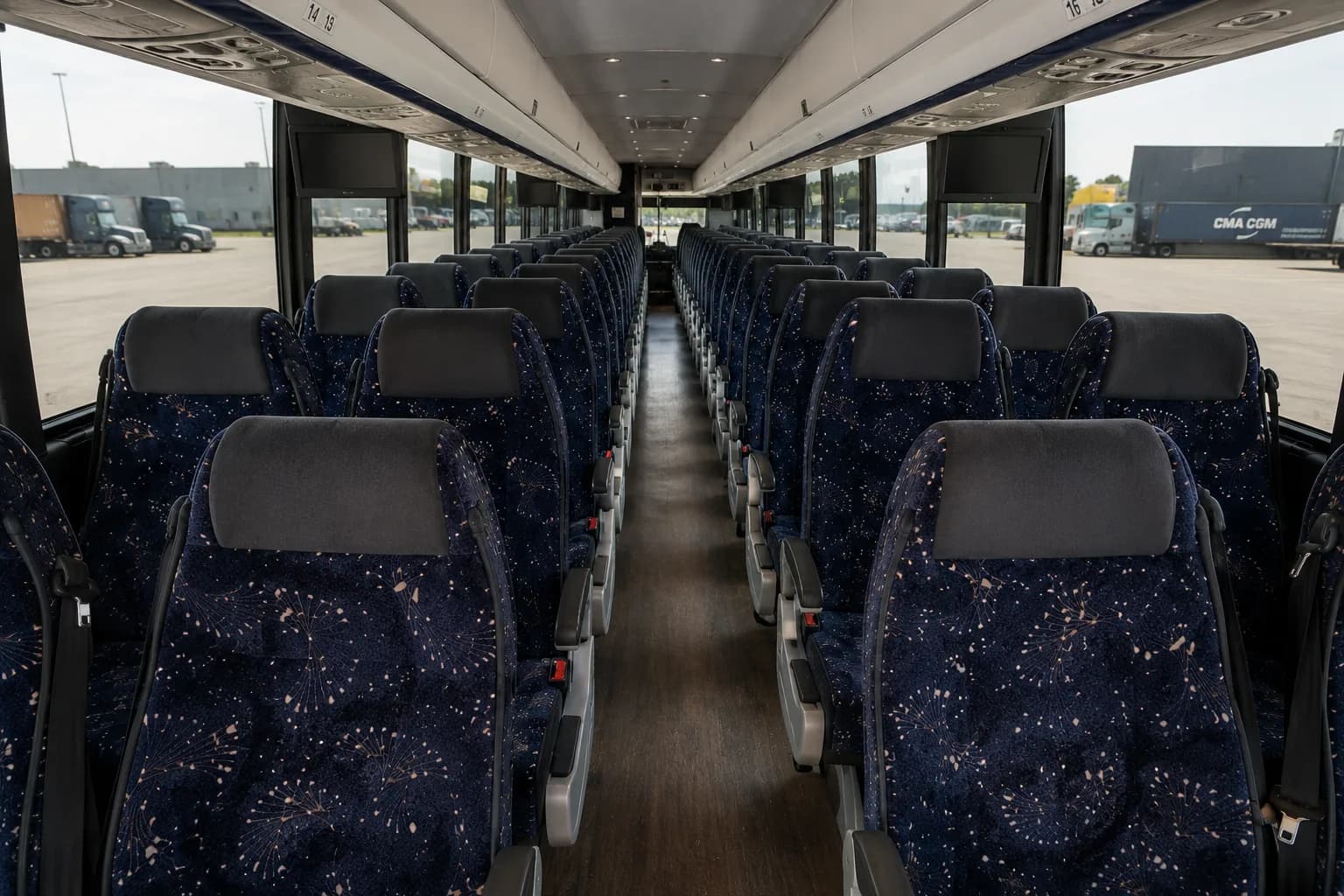
Match the vehicle to the headcount and the distance rather than to habit. Under fifteen passengers, a sprinter van is quick, comfortable, and easy on tight streets. Twenty to thirty-two riders fit a mini bus; forty and up belongs on a coach bus or full-size motor coach, which add underfloor luggage bays and an on-board restroom for the long hauls. If the ride itself is the event — a bachelorette, a milestone birthday — that is party bus territory. When you are torn between two sizes, ask for both prices; the answer is usually obvious once the numbers sit side by side.
Step 6: Reserve, sign, and read the fine print
Booking four to eight weeks ahead gets you the full choice of fleet; peak dates — spring weekends, graduation season, major game days — deserve even more runway. Expect to pay a deposit to hold the date with the balance due closer to travel, and before you sign, read the cancellation and change terms: what happens if your date moves, your headcount drops, or weather intervenes. Confirm exactly what is included in writing. None of this takes ten minutes, and it is the ten minutes that prevents every expensive surprise we have ever been asked to fix.
Step 7: The week before departure
Reconfirm the itinerary and pickup times with your operator, and get the driver's or dispatcher's direct phone number. Circulate a simple rider list with a boarding time fifteen minutes before you actually intend to leave. Assign one person — not the organizer juggling everything else — as the driver's point of contact for the day. If your trip crosses into unfamiliar cities, our step-by-step booking page and destination guides are useful companions for the planning that surrounds the ride itself.
What renting a bus looks like when it goes right
The bus arrives early. The driver already knows the route, the venue entrance, and the name of your point person. Luggage disappears into the bays, everyone boards in one place instead of twelve, and the group arrives together — which, for a corporate offsite, a wedding, or a school trip, was the entire point. Good group transportation is invisible in the memory of the day; only its absence is memorable.
Wherever your group starts — we serve all 50 states — the first step is the same one it has been since the top of this page: a date, a headcount, and an itinerary. If you have those three, you are five minutes from a real number. Send them through our quote form, or start by searching bus rental near me and putting every company you find through the four questions in step 4. We are happy to be compared.