
June 20, 2025 · 4 min read
Miami, Florida
By the Credence Charter Bus team
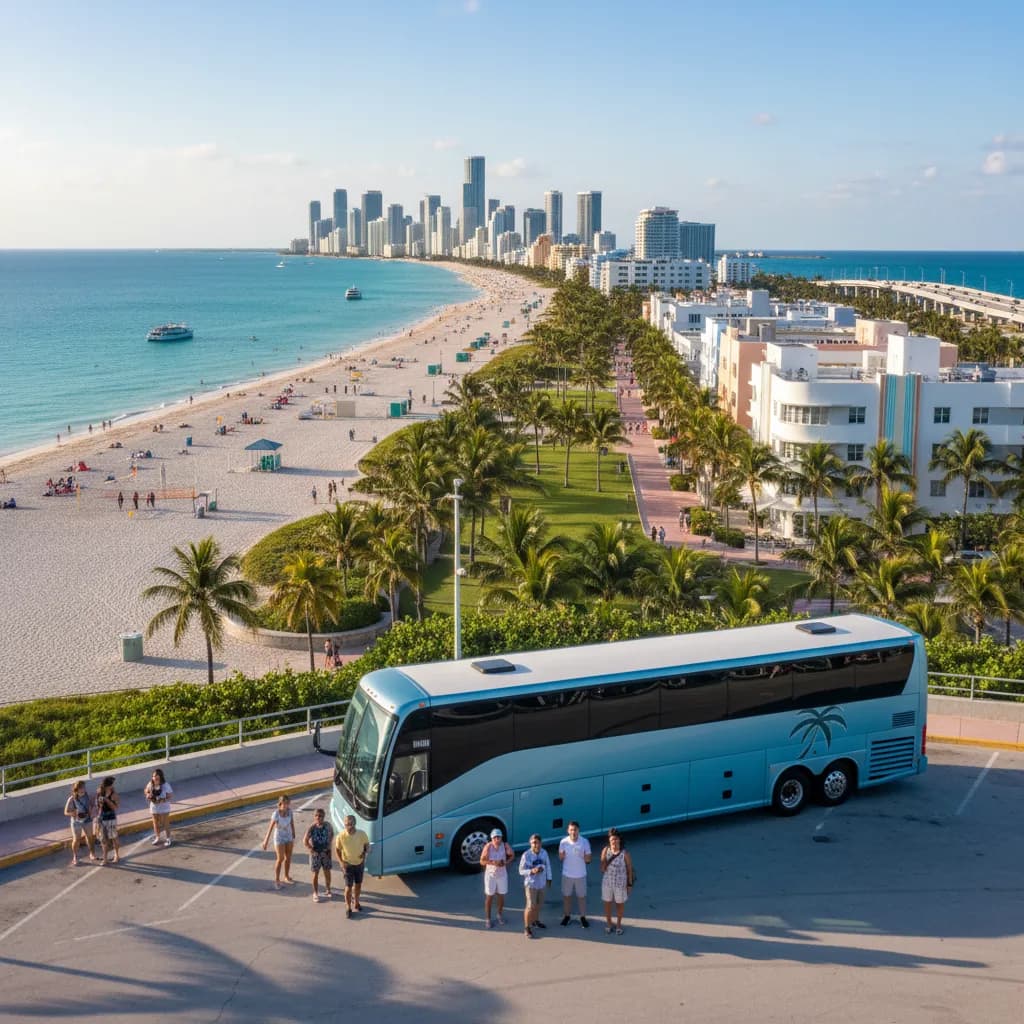
Miami is three or four different cities wearing one name. There is the Art Deco strip on Miami Beach, the street art of Wynwood, the Cuban coffee windows of Little Havana, and the cruise terminals of PortMiami moving more passengers than any port on earth. They are all worth seeing and none of them are close to each other. That spread is the reason a charter bus to Miami is usually the right call for a group rather than a nice extra.
The city also has two constraints that punish groups travelling in separate cars: causeway traffic and beach parking. Both of them get solved the moment everyone is on one vehicle with a driver who knows the alternates.
The causeways, and why they matter
Miami Beach is an island. Getting a group onto it means crossing water, and the crossing you choose is a real decision rather than a detail. The MacArthur and Julia Tuttle causeways are the standard routes for full-size vehicles. The Venetian Causeway is an older, narrower drawbridge route with restrictions that make it unsuitable for coaches, and a driver who does not know that will cost you an hour.
Parking on the beach side is the other half of the problem. Garages fill, street parking is scarce and expensive, and a group in four cars will not park together. With a coach, your driver sets everyone down at an agreed point, the group walks the Art Deco district, and the vehicle collects them at a fixed time. It sounds obvious. It is also the single biggest difference between a smooth Miami day and a frustrating one.
Cruise transfers are the classic use case
PortMiami is the busiest cruise port in the world, and embarkation morning is where chartered transport earns its keep. A group of forty arriving from Miami International in rideshares turns up in a dozen separate vehicles across ninety minutes, some at the wrong terminal. The same group on one coach arrives together, at the right terminal, with luggage handled once.
The return leg matters just as much. Disembarkation is a scheduled, crowded process, and having a known vehicle and driver waiting is worth a great deal when several thousand people are all leaving at the same time.
What groups build their days around
- The Art Deco Historic District along Ocean Drive and Collins Avenue, best seen on foot in the morning before the heat and the crowds arrive.
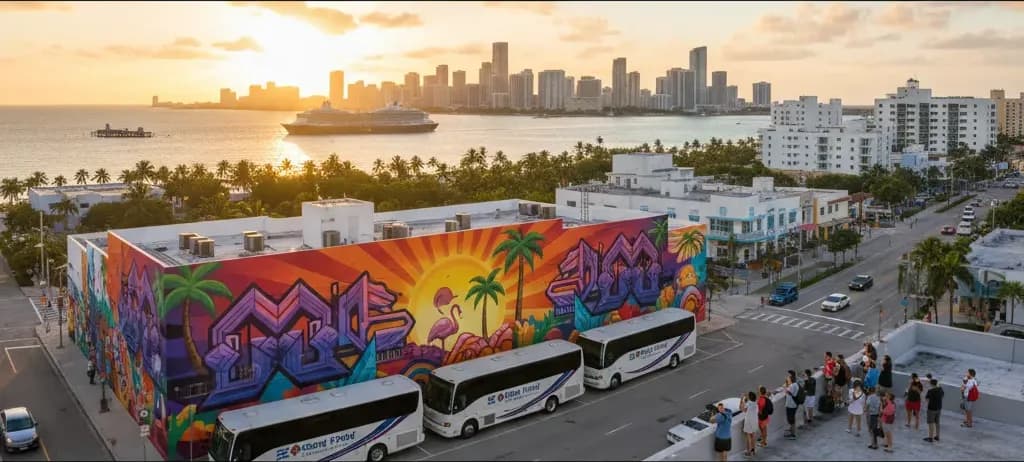
- Wynwood Walls and the surrounding warehouse district, which has become the city's outdoor gallery. It photographs beautifully and suits mixed-age groups.
- Little Havana and Calle Ocho for Cuban food, cigar rollers and domino players. Ask about a guided walk here, it adds a lot for a group.
- Vizcaya Museum and Gardens, a Gilded Age villa on Biscayne Bay that surprises people expecting only beaches.
- Everglades National Park, roughly an hour southwest, for airboats and a genuinely different half day.
- Fort Lauderdale is about thirty miles north and pairs easily into the same itinerary when you have your own vehicle.
Choosing a charter bus for a Miami itinerary
Size the vehicle to the group, but weigh the beach access question too, because the largest vehicles have the fewest places to stop on Miami Beach.
- For 40 or more, a full-size coach from our motor coach fleet seats up to 56 with luggage bays, reclining seats, climate control and a restroom. This is the standard for cruise transfers and multi-day itineraries.
- For 20 to 32, a mini bus is easier to position on the beach side and simpler in downtown traffic, which makes it the practical favourite for corporate groups.
- For 10 to 14, a sprinter van can reach hotel entrances that larger vehicles cannot, and works well for executive travel.
- For celebrations, a party bus seats 14 to 40 and suits a Miami night out better than trying to keep a group together across several rideshares.
Weather, seasons and traffic
Winter is Miami's high season for good reason. December through April brings warm, dry weather and the city is at its busiest, with Art Basel in early December and spring break filling March. Summer is hot and humid with near-daily afternoon thunderstorms, and it is also when rates are softest. Hurricane season runs from the first of June to the end of November and warrants flexible arrangements in September and October.
Traffic is a genuine planning input here, not a complaint. I-95 and the causeways congest hard at rush hour, and a schedule built without allowance for that will slip. Give your coordinator the real timings you need to hit, particularly for airport and port transfers, and let the routing be built backwards from them.
Practical notes for group leaders
- For cruise transfers, share your ship, terminal and boarding window. Terminals are far apart and the wrong one is a long detour.
- Agree beach-side drop and collection points in advance. This is the detail that most often gets missed.
- Book early for December through April, and much earlier still for Art Basel and spring break weeks.
- If the Everglades are on the list, plan it as a morning. Afternoon storms are common in summer and airboat operators pause for lightning.
Plan your Miami trip with us
We handle cruise transfers, conference shuttles, reunions and celebration weekends across South Florida, and we can build the day around the port or the convention centre rather than around traffic. See our airport transfer service for how we run arrivals and departures, and our coverage across Miami and up into Fort Lauderdale.
Send us your dates, group size and the stops you want, and we will come back with a clear, itemized quote. Request a free quote and we will take the logistics off your list.