December 1, 2025 · 4 min read
Big Sur, California
By the Credence Charter Bus team
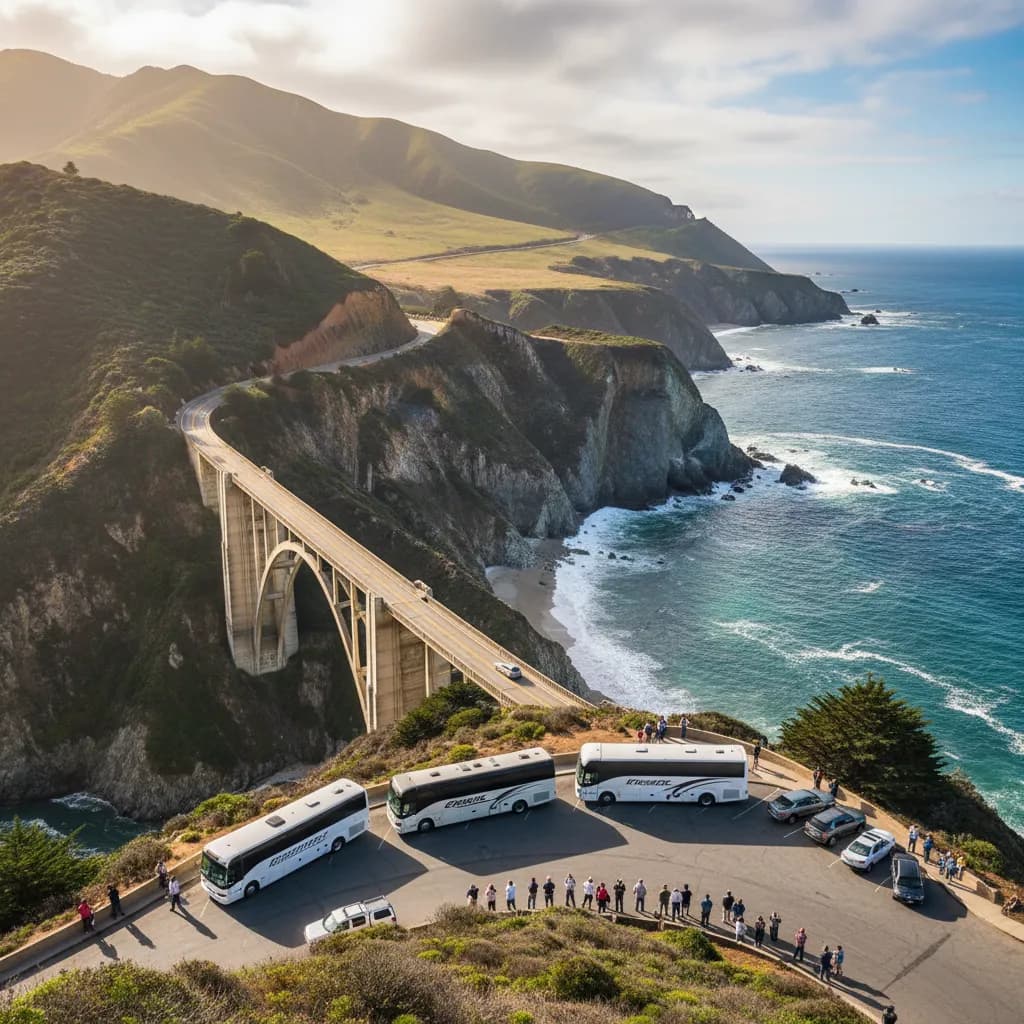
Big Sur is the ninety miles where the Santa Lucia Mountains meet the Pacific with almost nothing in between, and it is the stretch of California that most rewards not being the person driving. For groups, a charter bus to Big Sur solves three problems at once: the road, the parking, and the fact that in separate cars nobody sees the same thing at the same time.
What Big Sur actually is
It is not a town. There is no Big Sur center to park in and walk around — it is a stretch of Highway 1 between Carmel and San Simeon with state parks, a handful of restaurants, and a series of overlooks strung along it. Understanding that changes how you plan the day, because the itinerary is a sequence of stops on a road rather than a destination you arrive at.
Cell service is genuinely poor for most of the route. Agree meeting times and pickup points out loud before the group scatters at a stop, because you will not be able to text them afterwards.
The stops that work for a group
- Bixby Creek Bridge: the photograph everyone came for. The pullouts at either end are small and fill early, so this is a morning stop or not one at all.
- McWay Falls, Julia Pfeiffer Burns State Park: an eighty-foot waterfall onto a beach, reached by a short level path from the lot. The most accessible viewpoint on the coast and the best choice for a mixed-mobility group.
- Pfeiffer Big Sur State Park: redwoods, gentle walking, restrooms and picnic areas. The natural lunch stop, and the one place a group can spread out for an hour.
- Nepenthe: a restaurant on a clifftop terrace with a view that justifies the wait. Book ahead for any group over about eight.
- Point Lobos, just north of the boundary: sea otters, cypress, and easier parking than anywhere in Big Sur proper.
Which charter bus suits the Big Sur road
Highway 1 through Big Sur is two lanes with tight curves, steep drop-offs and small parking areas. Vehicle size is an access decision here, not just a comfort one.
- Twenty to thirty-two passengers: a mini bus is the sweet spot for this coast. It fits the state park lots, turns where a coach cannot, and still keeps the group together.
- Forty to fifty-six: a full-size charter bus is comfortable for the long approach from San Francisco or Los Angeles, but plan the stops around it — a few of the smaller pullouts are simply not options.
- Ten to fourteen: a sprinter van reaches everything, and for a small group it is the least compromised way to do the drive.
Whichever size you book, the on-board restroom on a full coach matters more than usual here. There are long gaps between facilities, and an unplanned stop on a road with almost no shoulder is a genuine nuisance.
Getting there, and the closures nobody plans for
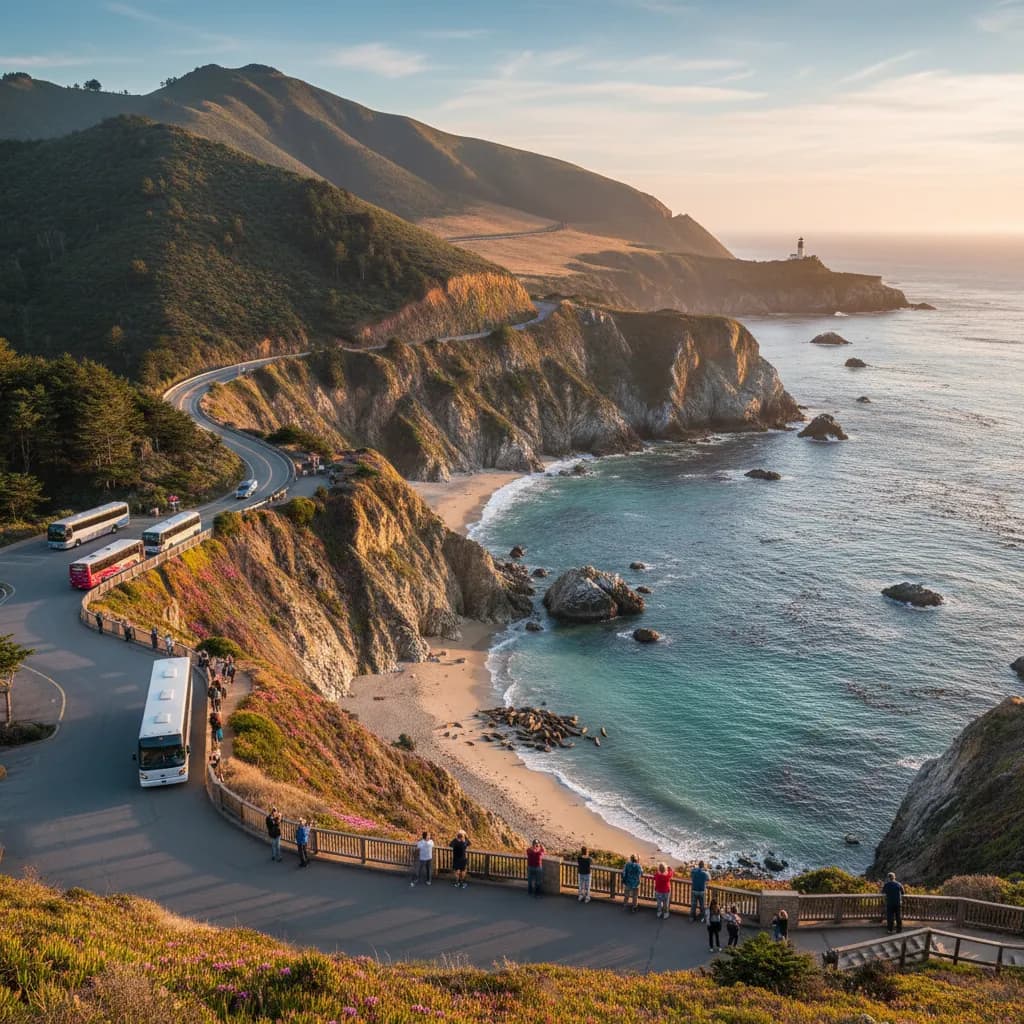
Big Sur is roughly 150 miles south of San Francisco and 300 north of Los Angeles, but mileage understates it — allow three hours from Monterey to San Simeon with stops, not the ninety minutes the distance suggests. Most groups approach from Monterey or Carmel-by-the-Sea, which puts the best of the coast within an easy day.
Landslides close this road, sometimes for months. Check Caltrans before you commit to an itinerary and again the week you travel, and plan a trip that survives a closure by reversing rather than canceling. Groups searching for charter bus rental near me for a Big Sur day should ask specifically whether the operator's drivers have run Highway 1 before, because knowing which pullouts a 45-foot coach can safely enter is not something learned on the day.
When to go
April to May and September to October give the mildest weather and the thinnest crowds. Summer brings the crowds and, on this coast, persistent morning fog that often does not clear until noon — an afternoon-weighted itinerary works better than an early one in July. Winter is quiet and can be spectacular, but it is also the season the road is most likely to be shut.
Planning the day
Pick three stops, not six. The most common mistake groups make in Big Sur is scheduling a stop every twenty miles and then spending the day loading and unloading a bus. Three considered stops with an hour at each leaves time to actually look at the place, and the drive between them is not dead time — it is the best part of the day.
Our event transportation team builds these itineraries around driving hours and daylight rather than distance. Send your dates, headcount and the stops you have in mind and request an all-in quote — driver, fuel, tolls and taxes included, usually back the same day.