
April 30, 2024 · 4 min read
Death Valley National Park, California
By the Credence Charter Bus team
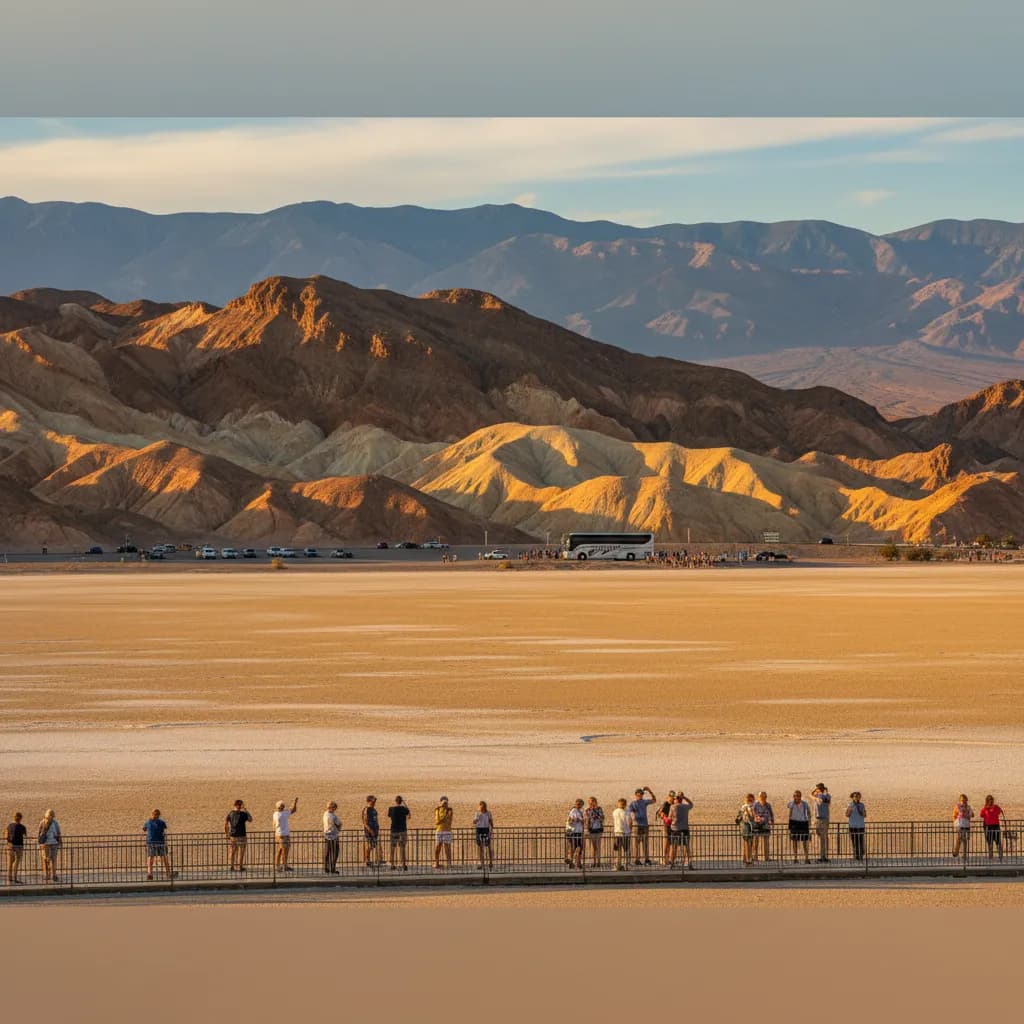
Death Valley is the lowest, driest and hottest place in North America, and at over three million acres it is also the largest national park outside Alaska. Distances inside it are the thing that catches groups out — this is a park where two stops on the same map page can be forty miles apart. A charter bus to Death Valley National Park makes that manageable, but only if the itinerary is built around one specific constraint.
The vehicle length rule that shapes the whole trip
Two of Death Valley's best-known drives are closed to long vehicles. Artist's Drive, the nine-mile one-way loop past Artist's Palette, and the road up to Dante's View both prohibit vehicles over 25 feet — the curves and grades genuinely will not take a coach. This is not a suggestion, and it is the single most important thing to know before booking.
There are two ways to handle it. Either build the day around the stops a full-size vehicle can reach, which is most of the park's highlights, or book a smaller vehicle and get everything. Groups who want Dante's View at sunset should plan on the smaller vehicle from the start rather than discovering the restriction at the junction.
The stops a coach can reach
- Badwater Basin: 282 feet below sea level, with a large paved lot and a boardwalk onto the salt flats. The essential stop, and fully coach-accessible.
- Zabriskie Point: eroded golden badlands from a short paved walk above the parking area. Best at sunrise, and the lot takes full-size vehicles.
- Mesquite Flat Sand Dunes: roadside dunes near Stovepipe Wells with a large lot. Easy for a group, and spectacular in low light.
- Furnace Creek: the visitor center, fuel, food and the only reliable water in the park. Every itinerary should route through it.
- Harmony Borax Works: a short interpretive walk through the twenty-mule-team history, five minutes from Furnace Creek.
Which charter bus suits Death Valley
- Forty to fifty-six: a full-size charter bus is comfortable on the long approach and fine on the main park highways. It cannot do Artist's Drive or Dante's View.
- Twenty to thirty-two: a mini bus is the vehicle that unlocks the whole park, including both restricted roads, while still carrying a real group.
- Ten to fourteen: a sprinter van goes everywhere and suits photography groups working around sunrise and sunset.
Air conditioning is not a comfort item here, it is the reason the trip works. Ask what the vehicle is rated for if you are traveling anywhere near the shoulder of summer.
Getting there, and the fuel problem
Las Vegas is the most common starting point at around two hours to Furnace Creek. From Ridgecrest it is about two hours, from Bishop around two and a half, and from Los Angeles between four and five.
Fuel inside the park is limited and expensive, and there are long stretches with no services at all. A driver who knows to fill up before the gate rather than at Stovepipe Wells is worth having. Cell service is unreliable across most of the park, so agree pickup times out loud. Groups searching for charter bus rental near me for a Death Valley day should mention the vehicle length restrictions in the first conversation — an operator who does not know about them has not run the park.
How long to allow
One day covers the core: Zabriskie Point, Badwater, the dunes and Furnace Creek, with roughly two hours of driving between them. That is a full day from Las Vegas and a long one, but it works and it is what most groups book.
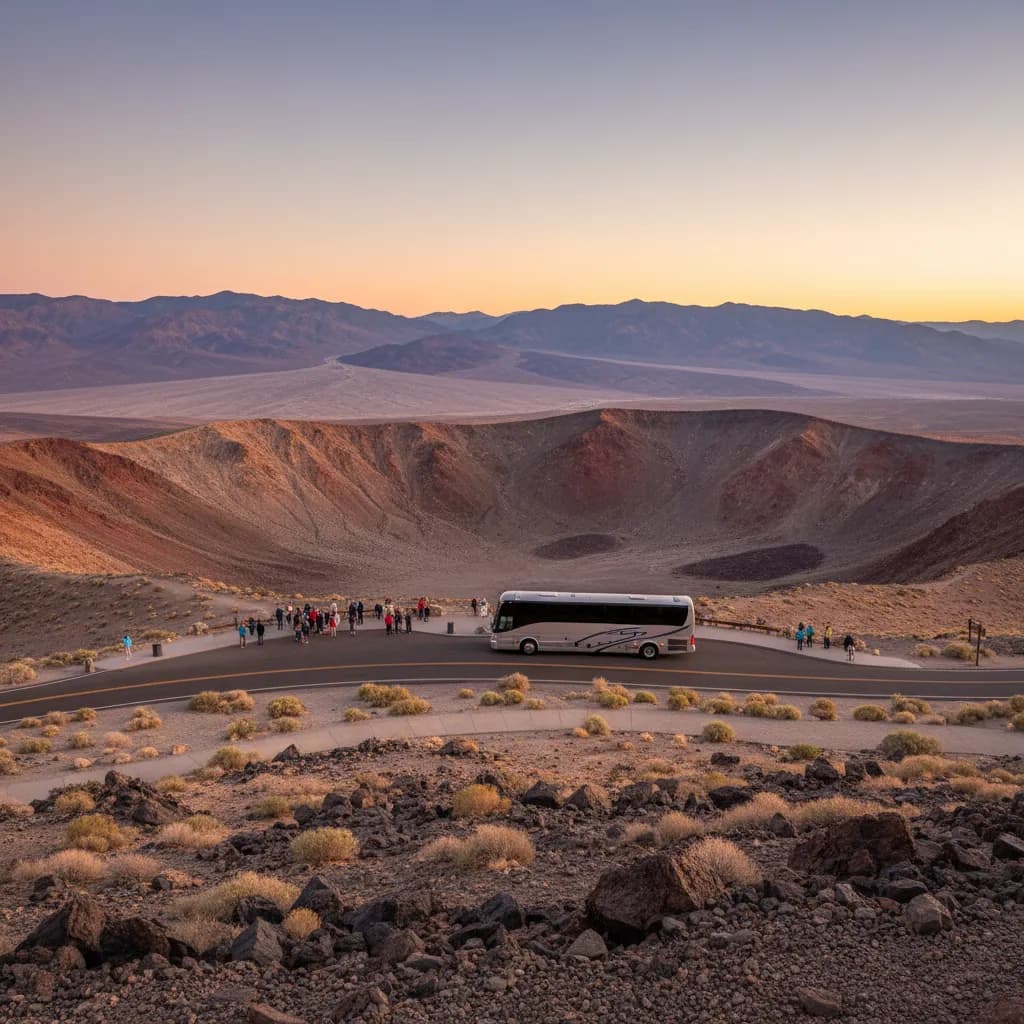
Two days changes the trip. It buys sunrise at Zabriskie and sunset at the dunes, which are the two hours the park is at its best, and it opens up the northern half — Ubehebe Crater, a half-mile-wide volcanic pit about an hour north of Furnace Creek, and the Golden Canyon walk from the valley floor. It also means the group is not doing four hours of highway on the same day as four hours of sightseeing.
If you only have one day, cut stops rather than shortening them. Death Valley rewards standing still in a landscape far more than it rewards ticking off another overlook forty miles away.
When to go
- October to April: the only sensible window. Daytime temperatures are pleasant and the light is at its best.
- December to February: cool, quiet and occasionally snow-capped on the surrounding peaks. Excellent for walking.
- May to September: routinely 110 to 120 degrees, and the park itself advises against hiking after ten in the morning. Groups do travel in summer, but the day has to be built around the vehicle rather than around walking.
Booking the trip
Tell us your headcount and which stops matter most, because that determines the vehicle rather than the other way round. Our event transportation team will tell you plainly whether your stop list fits a full coach or needs the smaller vehicle.
Request an all-in quote with your dates and group size — driver, fuel, tolls and taxes included, usually back the same day.