August 12, 2025 · 4 min read
Chincoteague, Virginia
By the Credence Charter Bus team
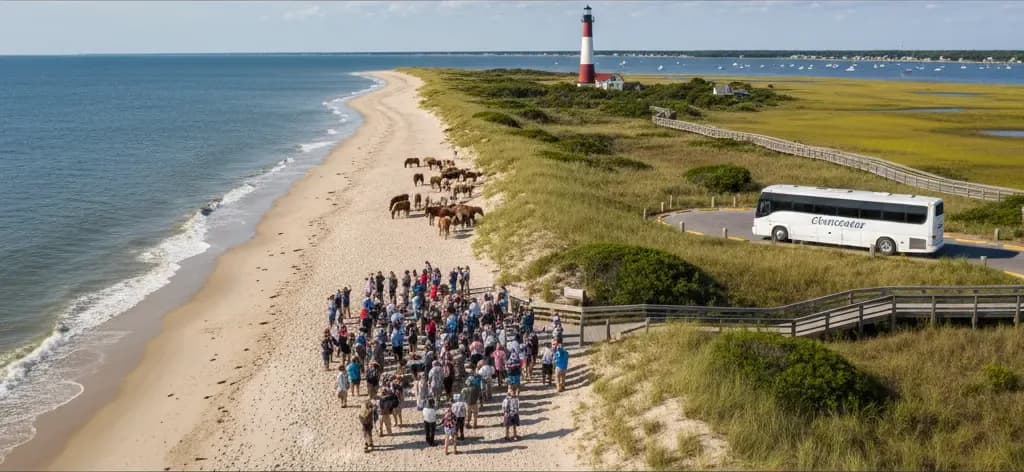
Chincoteague is a small island town on Virginia's Eastern Shore, and next to it sits Assateague, where several hundred wild ponies have lived on the salt marsh for centuries. The combination — a quiet working island and a genuinely wild herd a bridge away — makes it one of the more distinctive group destinations on the mid-Atlantic coast. A charter bus to Chincoteague handles what is, from almost anywhere, a long drive.
Two islands, and the difference matters
Chincoteague is the inhabited one: motels, restaurants, shops, and where your group will stay and eat. Assateague is the barrier island across a short bridge, managed as Chincoteague National Wildlife Refuge on the Virginia side, and it holds the beach, the lighthouse and the ponies.
There is an entrance fee for the refuge, charged per vehicle, and the beach parking areas are the busiest part of any summer day. The refuge closes at dusk, which sets the shape of the schedule more firmly than most destinations do.
The ponies, and how to actually see them
The herd is genuinely wild and moves around the marsh, so sightings are not guaranteed from the road. The Woodland Trail has a pony overlook, the Wildlife Loop opens to vehicles in the afternoon, and the best viewing is early morning or late afternoon when the animals come out to graze.
They are not tame. Every year visitors are bitten or kicked trying to feed them, and the refuge asks people to stay at least forty feet back. With a school group, say that on the bus before you arrive.
Pony Penning is a different trip entirely
On the last Wednesday of July the Chincoteague Volunteer Fire Company swims the herd across the channel at slack tide, and an auction follows the next day. It has been running since 1925 and it draws tens of thousands of people to an island with one main road.
If that is your target date, book lodging and transport six months to a year out, expect severe traffic and restricted parking, and plan on an early arrival. Groups searching for charter bus rental near me for Pony Penning week are usually too late by spring. Any other week of the year, the island is quiet and easy.
What else is on the islands
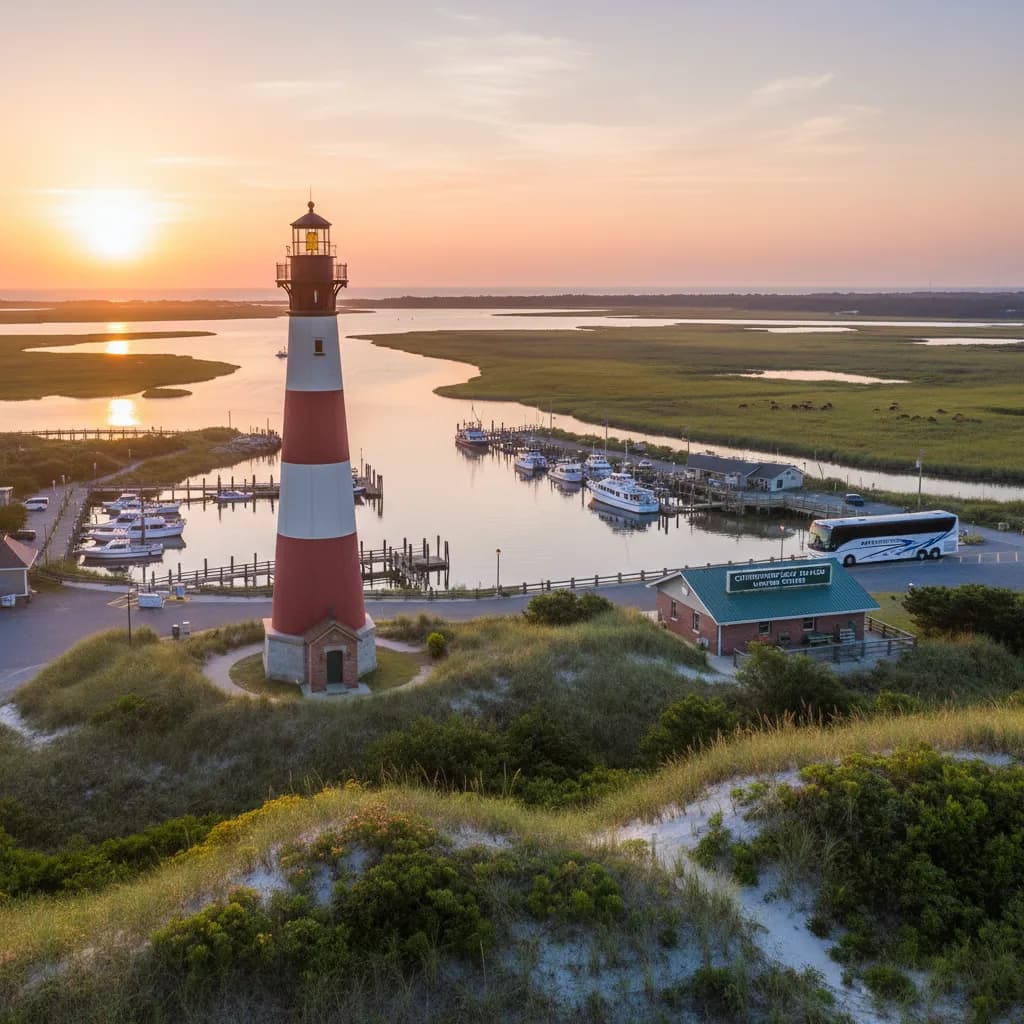
- Assateague Lighthouse: red and white banded, built in 1867, with a climb to the top when it is open.
- The beach: undeveloped, wide and clean, with lifeguarded sections in season.
- Kayak and boat tours around the marsh, which is by some distance the best way to see birds and ponies together.
- NASA Wallops Flight Facility Visitor Center, about ten minutes off the island — free, small and unexpectedly good for a school group.
- The Museum of Chincoteague Island, which holds Misty of Chincoteague herself, preserved after the book made the island famous.
Which charter bus suits the trip
- Forty to fifty-six: a full-size charter bus is right for the long approach, with an on-board restroom that earns its cost on the Eastern Shore run.
- Twenty to thirty-two: a mini bus is easier on the island's narrow streets and in the refuge parking areas.
- Ten to fourteen: a sprinter van suits a birding group or a family party.
Getting there
This is the part to plan honestly. Chincoteague is around three hours from Washington and Baltimore, three and a half from Richmond, and about two and a half from Norfolk over the Chesapeake Bay Bridge-Tunnel, which is itself worth the trip. We run pickups from Norfolk, Virginia Beach, Richmond and Baltimore.
As a day trip from any of those it is six or seven hours of driving for a few hours on the island. Most groups do considerably better with an overnight, and lodging on Chincoteague is inexpensive outside July.
Why the ponies are there at all
Nobody knows for certain. The romantic version has them swimming ashore from a wrecked Spanish galleon, which is the story the island prefers and the one Marguerite Henry used in Misty of Chincoteague. The likelier explanation is that seventeenth-century colonists grazed livestock on the barrier island to avoid mainland fencing laws and taxes, and simply left them there.
Either way they have been feral for three centuries and have adapted to it. They eat marsh grass with a high salt content, which means they drink roughly twice as much fresh water as a domestic horse — hence the bloated appearance that visitors often mistake for illness. They are also smaller than their ancestors would have been, which is what living on salt marsh for three hundred years does.
The Virginia herd is owned by the volunteer fire company and capped at around 150 animals by permit, which is why the July auction exists. The Maryland herd on the northern end of Assateague is managed separately by the National Park Service and is genuinely wild.
When to go
May, June, September and early October are ideal — warm, quiet, and with the best wildlife viewing. Midsummer is hot, humid and busy, with mosquitoes on the marsh trails that visitors consistently underestimate. Winter is stark and lovely, with enormous numbers of migratory waterfowl in the refuge and most island businesses closed.
Booking the trip
Send your dates, headcount and pickup point, and say whether you are targeting Pony Penning week — it changes everything about the booking. Our event transportation team plans Eastern Shore trips around the refuge hours and the tides.
Request an all-in quote and you will usually have an itemized price back the same day, driver, fuel, tolls and taxes included.