
December 6, 2025 · 4 min read
Nantucket, Massachusetts
By the Credence Charter Bus team

Nantucket is thirty miles out into the Atlantic, fourteen miles long, and for a few decades in the early 1800s it was the whaling capital of the world. What survives is an almost intact gray-shingled town that has been protected from development for a century. A charter bus to Nantucket is, in practice, a charter bus to the ferry — and understanding that early makes the rest of the planning straightforward.
Almost nobody takes a vehicle across
Nantucket restricts vehicles tightly and the ferry reflects it. Space for cars is limited and books months ahead; space for a full-size coach is scarcer still and priced accordingly. For a group visit it is almost never worth it.
The standard arrangement is a charter to Hyannis, then walking onto the ferry. The Steamship Authority's traditional boat takes a little over two hours; the high-speed catamaran does it in about an hour, and Hy-Line runs a fast ferry too. Walk-on passengers need no vehicle reservation, and Nantucket town is compact enough that a group does not need a vehicle once it arrives.
For anything beyond the town — Sankaty Head, Siasconset, the beaches — the island's shuttle system runs in season, or arrange island transport in advance. Neither requires bringing your own coach across.
What to see
- The Whaling Museum: built around a candle factory with a full sperm whale skeleton overhead. The best single explanation of why this island mattered, and worth ninety minutes.
- Brant Point Lighthouse: the small white light at the harbor entrance, and the thing every group photographs from the ferry as it comes in.
- The Old Mill, built in 1746 and still grinding corn — the oldest working windmill in the country.
- Siasconset: a village of rose-covered cottages at the eastern end, with a bluff walk along the shore. About twenty minutes from town.
- Sankaty Head Lighthouse: red-banded, on an eroding bluff, and moved bodily inland in 2007 to save it.
The town is cobbled, and it matters
Main Street is genuinely cobbled and much of the historic district has brick sidewalks that have been heaving for two hundred years. It is charming and it is hard walking. For a senior group, plan shorter distances than the map suggests and build in places to sit; for a school group it is a non-issue.
Everything worth seeing in town sits within about ten minutes of the wharf, which makes a day trip genuinely workable even on a two-hour ferry.
Which charter bus fits the mainland leg
- Forty to fifty-six: a full-size charter bus handles the run down to Hyannis from Boston, Providence or further, with an on-board restroom for what can be a slow summer drive.
- Twenty to thirty-two: a mini bus suits a smaller historical society or club and is easier around the Hyannis terminal.
- Ten to fourteen: a sprinter van works for a small corporate group or a family party.
Corporate retreats to Nantucket are a steady part of what we run in shoulder season, and our corporate travel team handles the ferry-timed transfers at both ends.
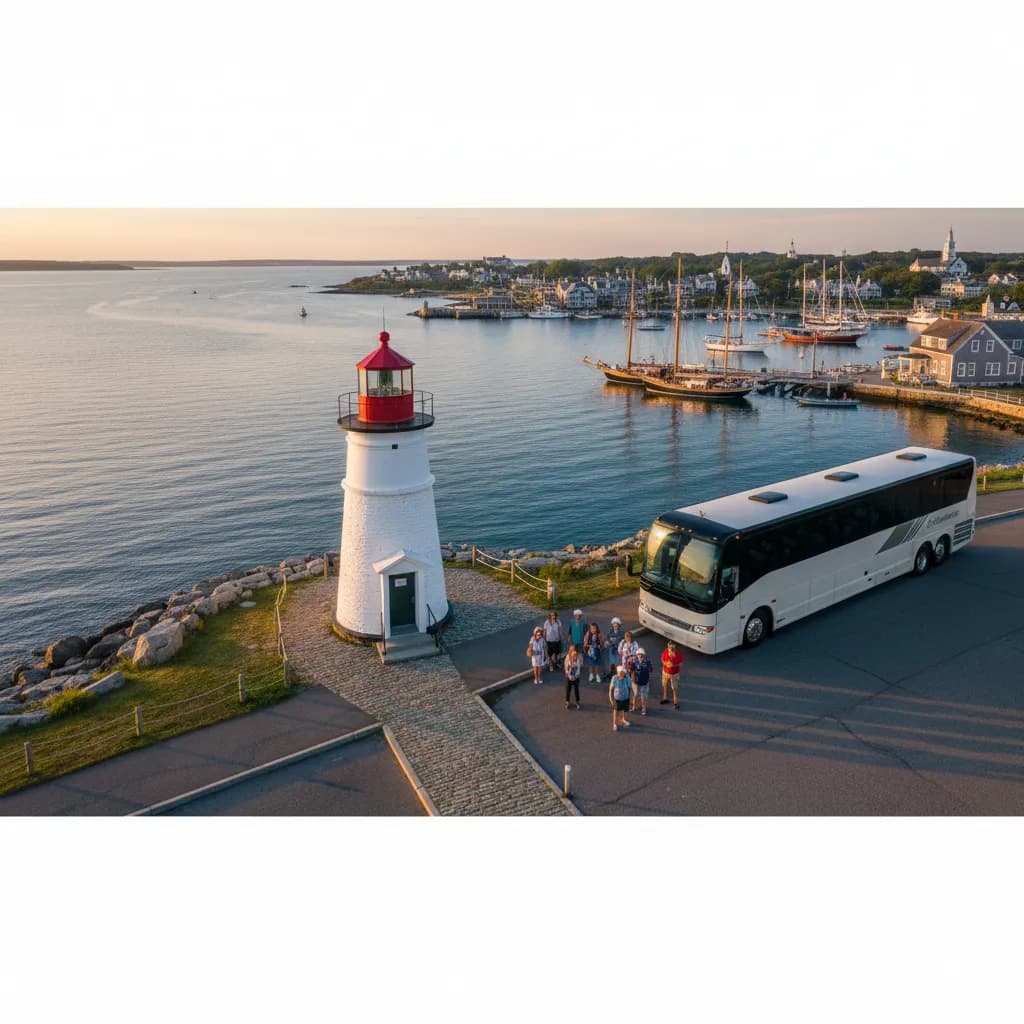
Getting to the ferry
Hyannis is the main departure point, roughly ninety minutes from Boston and about an hour and a half from Providence, plus whatever the Cape bridges add in summer — which can be substantial. We also run pickups from Barnstable, Plymouth and New Bedford.
Allow far more buffer than the drive time suggests. Groups searching for charter bus rental near me for a Cape or island trip consistently underestimate the Sagamore and Bourne bridge backups on a July weekend, and a missed fast ferry can cost the whole morning.
Day trip or overnight
A day trip works, and a great many groups do it. Take the fast ferry out in the morning, spend five or six hours in town and at the Whaling Museum, and return in the early evening. That covers the historic core comfortably and requires no lodging on an island where lodging is expensive.
What a day trip does not cover is the rest of the island. Siasconset, Sankaty Head and the beaches all need transport and time, and squeezing them into a day means rushing the town, which is the part most worth seeing. If the group wants the whole island, stay a night and let the schedule breathe.
When to go
May, June and September are ideal — everything is open, ferries run frequently, and the island is not overwhelmed. July and August are beautiful and busy, with the highest prices of the year. From November the island quiets dramatically and ferry schedules thin out, though the Christmas Stroll in early December is a genuinely lovely group trip if you can get the sailings.
Booking the trip
Book the ferry first, then send us the sailing times with your headcount and pickup point — the boat is the fixed point and everything else fits around it.
Request an all-in quote and you will usually have an itemized price back the same day, driver, fuel, tolls and taxes included.