January 18, 2026 · 4 min read
Joshua Tree National Park, California
By the Credence Charter Bus team
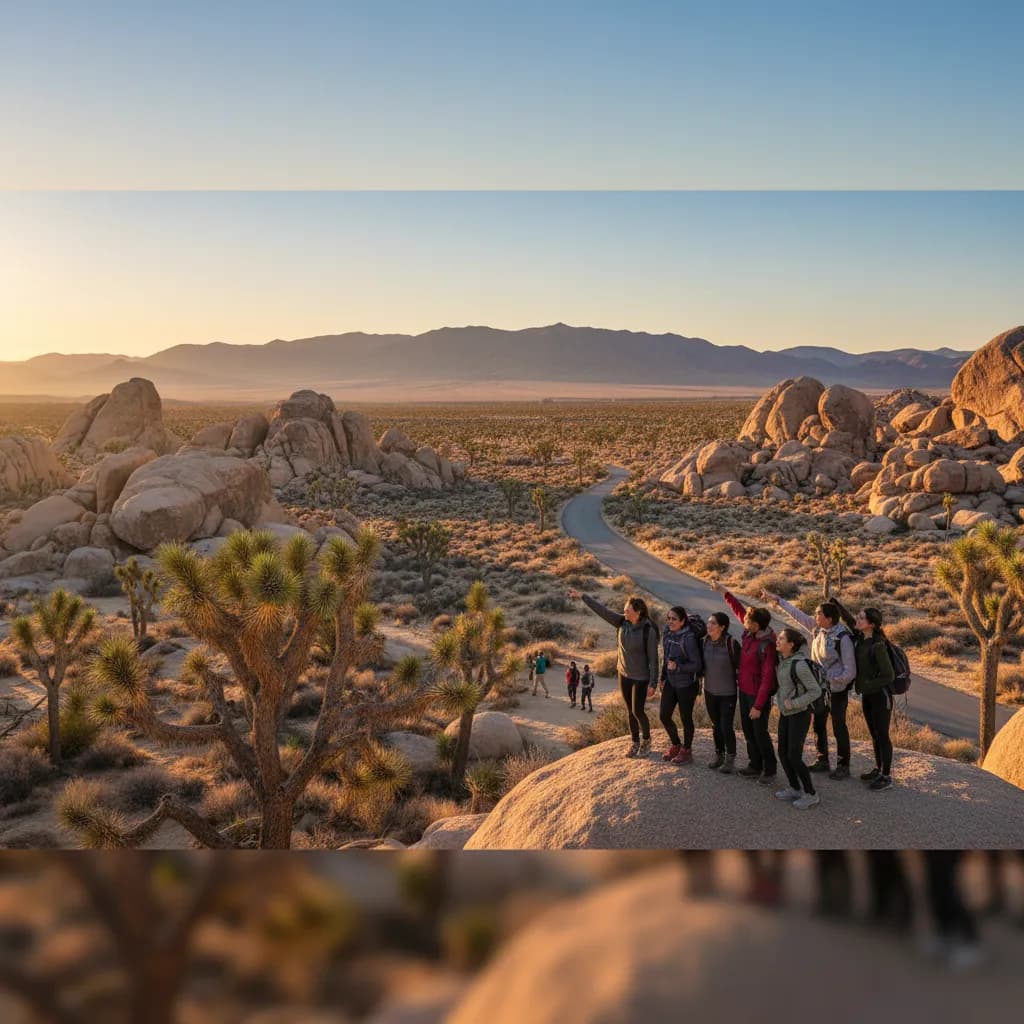
Two deserts meet at Joshua Tree, and the seam between them is why the place looks like nowhere else in California: gnarled trees standing over piles of granite that seem to have been stacked by hand. Nearly three million people a year come to see it. For a group, a charter bus to Joshua Tree National Park handles the two things the park is genuinely difficult about — parking and distance between stops.
Know which entrance you are using
The park has three, and picking the wrong one adds an hour. The West Entrance at Joshua Tree village and the North Entrance at Twentynine Palms both open onto the developed northern half, where almost everything a first-time group wants to see is located. The South Entrance at Cottonwood, off Interstate 10, is convenient from Palm Springs and Indio but sits about forty miles of park road from Hidden Valley.
The West Entrance backs up badly on spring weekends. If you are arriving on a Saturday morning between February and April, use the North Entrance at Twentynine Palms and skip the line.
The stops that work for a group
- Hidden Valley: a one-mile loop through a rock-enclosed bowl, flat enough for almost anyone and the best single introduction to the park.
- Skull Rock: a roadside formation with a small pullout. Popular, tight, and better as a short scheduled stop than an open-ended one.
- Jumbo Rocks: the boulder field that photographs best, with room for a group to spread out.
- Cholla Cactus Garden: a quarter-mile boardwalk through a dense stand of teddybear cholla. Ten minutes, and unlike anything else on the itinerary.
- Keys View: a paved overlook at 5,185 feet looking down over the Coachella Valley and the San Andreas Fault. Best in the late afternoon.
Which charter bus suits a Joshua Tree day
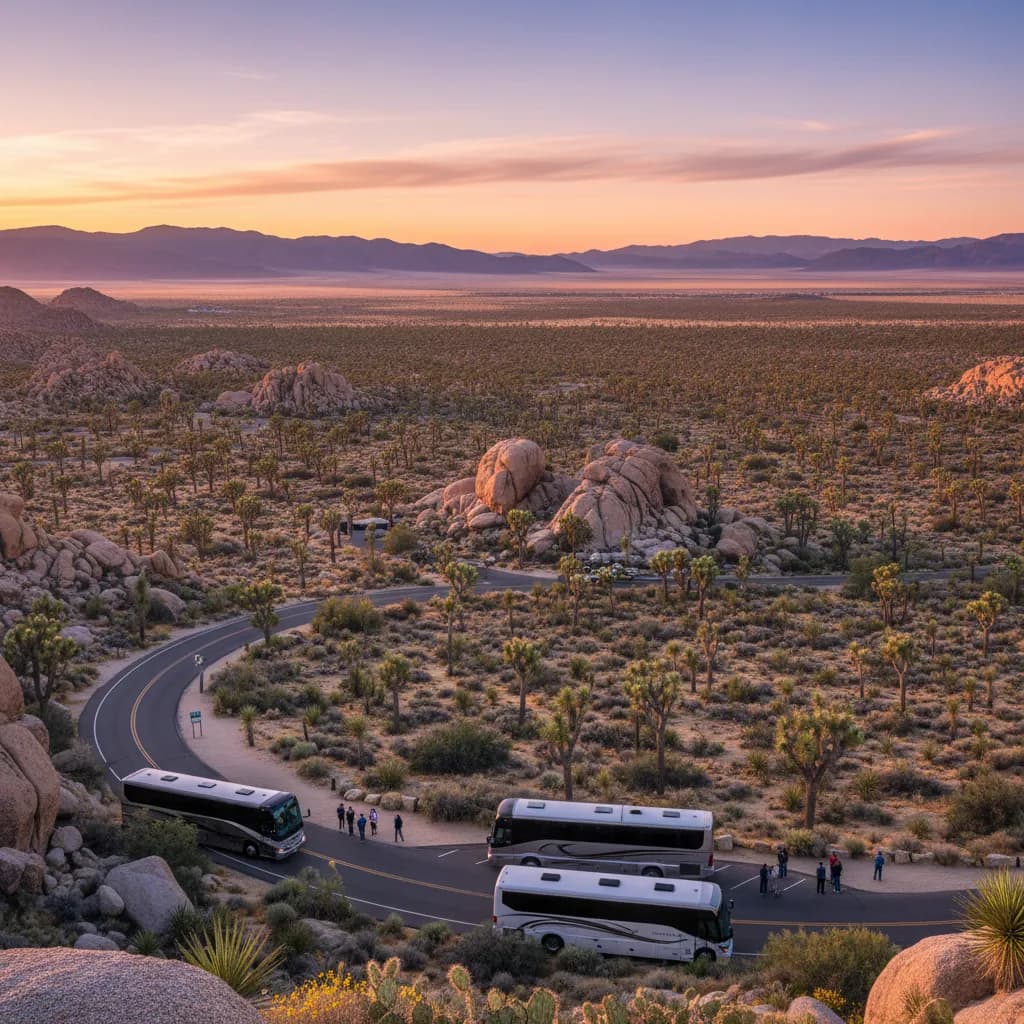
Park Boulevard, the main road through the northern half, handles full-size vehicles without difficulty. The constraint is the parking areas at individual trailheads, several of which are small dirt lots.
- Forty to fifty-six: a full-size charter bus is comfortable for the long approach from Los Angeles or San Diego and fine on the main park road. Plan stops at the larger lots and skip the small pullouts.
- Twenty to thirty-two: a mini bus reaches everything, parks at the smaller trailheads, and is the easiest vehicle to run inside the park.
- Ten to fourteen: a sprinter van suits a small group or a photography trip built around sunrise and sunset positions.
The on-board restroom on a full coach earns its keep here. There is no water and there are no services inside the park beyond the visitor centers, and the drive between the northern stops and the South Entrance is a long way with nothing in between.
Getting there and what the desert requires
From Palm Springs it is about forty-five minutes to the West Entrance; from Los Angeles between two and three hours depending on traffic through the pass. We also run pickups from Twentynine Palms, Yucca Valley and Indio for groups already staying in the area.
Bring more water than seems reasonable — a gallon per person per day is the park's own guidance, and there is nowhere to buy it once you are inside. Cell service is effectively absent across most of the park, so fix pickup times and points before the group disperses. Anyone searching for charter bus rental near me for a desert day should confirm the vehicle's air conditioning is rated for the conditions, because a coach idling in 100-degree heat while a group hikes is doing real work.
Staying after dark
Joshua Tree is a designated International Dark Sky Park, and on a moonless night the Milky Way is visible to the naked eye across most of the park. For a group this is the easiest upgrade there is: stay for two hours after sunset at Jumbo Rocks or the Cholla garden pullout, and the trip gains a second act that costs nothing but the driver's time.
Two practical notes. The park does not light its roads, so a late departure means the driver is working in genuine darkness on a road with no shoulder — worth confirming when you book rather than deciding on the night. And desert temperatures fall hard after sunset, often twenty-five degrees or more from the afternoon high, so tell the group to bring a jacket even in June.
When to go
- October to May: the season. Daytime temperatures are comfortable and the nights are cold enough to want a jacket.
- March and April: wildflowers in a good year, and the busiest weekends of the whole calendar.
- June to September: routinely above 100 degrees, and hiking in the middle of the day is genuinely unsafe. Groups that travel in summer should plan a sunrise start and be finished by eleven.
Booking the trip
Send your dates, your headcount and the entrance you plan to use, along with whether you want the day built around sunset at Keys View — that one decision reorders everything else. Our event transportation team plans park itineraries around driving time and daylight rather than a stop list.
Request an all-in quote and you will usually have an itemized price back the same day, driver, fuel, tolls and taxes included.