
March 25, 2025 · 4 min read
Olympic National Park, Washington
By the Credence Charter Bus team
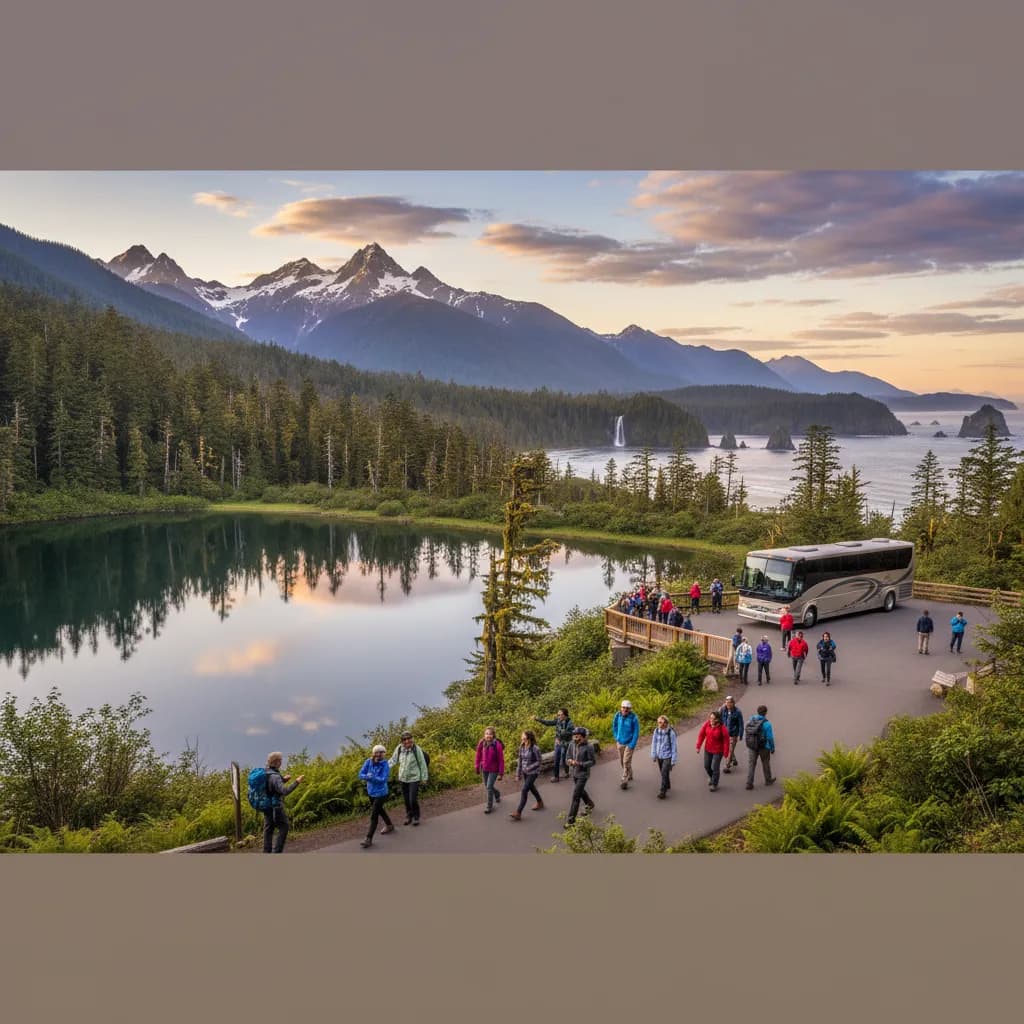
Olympic National Park contains glaciated mountains, temperate rainforest and seventy miles of wild Pacific coast, and it is a UNESCO World Heritage Site for exactly that reason. It also has one structural quirk that governs every itinerary: no road crosses the interior. A charter bus to Olympic National Park drives around the outside, and understanding that early is the difference between a workable plan and an impossible one.
The park is a ring, not a destination
US Highway 101 loops around the peninsula for roughly 330 miles, and every part of the park is reached by a spur road running inward from it. Hurricane Ridge, the Hoh Rain Forest, Sol Duc and the coastal beaches are each separate drives, and moving between them means returning to the highway.
The practical consequence: two of the three ecosystems in one day is realistic, three is a stretch, and the whole loop is a two- or three-day trip. Groups that plan the mountains, the rainforest and the coast in a single day spend nine hours on a bus.
The three parts, and what each costs in time
- Hurricane Ridge: seventeen miles up from Port Angeles to a mile-high ridge with views across to Canada. About forty minutes each way, and the road can close for weather or maintenance — check before you commit.
- The Hoh Rain Forest: about an hour in from the highway on the Upper Hoh Road, a dead-end. The Hall of Mosses trail is a level three-quarter-mile loop and the single most photographed thing in the park.
- The coast: Ruby Beach, Rialto Beach and Kalaloch, with sea stacks, driftwood and tide pools. Right on the highway, which makes them the easiest stops to add.
- Lake Crescent: a glacially carved lake of remarkable clarity beside the highway west of Port Angeles, with the short Marymere Falls walk. The best single stop if time is tight.
- Sol Duc: hot springs and a waterfall, about half an hour in from the highway.
Which charter bus suits the peninsula
- Forty to fifty-six: a full-size charter bus handles US-101 and the main spurs comfortably, and the on-board restroom earns its cost on a route with long gaps between facilities.
- Twenty to thirty-two: a mini bus is easier on the narrower spur roads and at the smaller trailhead lots, particularly at the Hoh.
- Ten to fourteen: a sprinter van reaches everything and suits a small photography or hiking group.
Fuel and food are genuinely sparse on the western side of the peninsula. A driver who fills up in Port Angeles or Forks rather than assuming something will appear is worth having.
Getting there, including the ferry question
From Seattle there are two routes. The Washington State Ferry from Edmonds or Seattle shortens the drive considerably but adds a sailing, and vehicle space for a coach needs arranging in advance. Driving south around Puget Sound through Tacoma and Olympia avoids the ferry entirely and takes about three hours to Port Angeles.
For a group, the land route is usually simpler and more predictable. We run pickups from Seattle, Tacoma, Port Angeles and Forks, and groups searching for charter bus rental near me for the peninsula should say which side of the park they want, because it changes the whole routing.
A realistic two-day shape
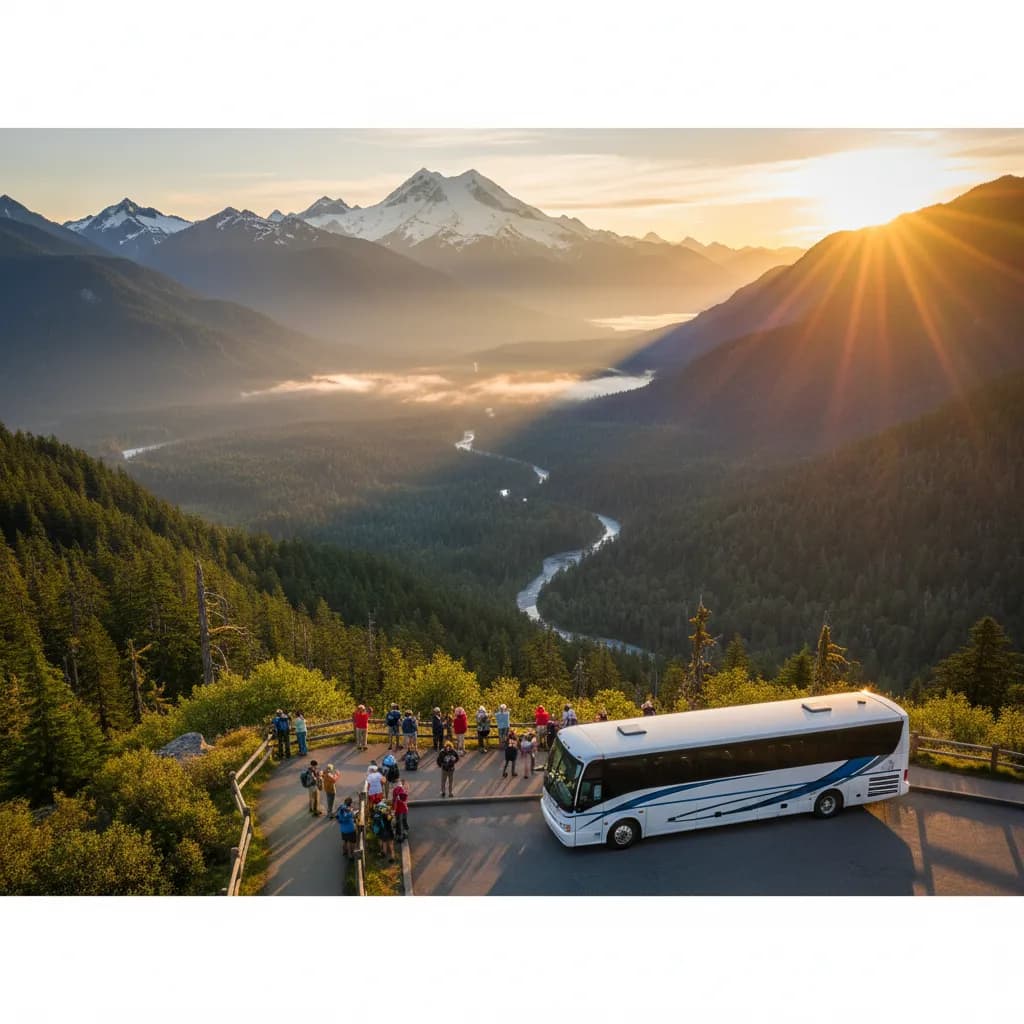
The itinerary that works best for most groups runs counterclockwise. Day one: drive to Port Angeles, take Hurricane Ridge in the afternoon when the cloud has usually lifted, and stay overnight on the north side. Day two: Lake Crescent and Marymere Falls in the morning, then south and west to the Hoh in the middle of the day, finishing with Ruby Beach at sunset before the drive home.
That covers all three ecosystems properly without any day exceeding about four hours of driving. Compressing it into one day means cutting either the ridge or the rainforest, and both are the reason people come.
Lodging inside the park is limited and books far ahead. Port Angeles and Forks have the most rooms and are the practical bases for a group of any size.
When to go
July through September is the dry season and the only period when Hurricane Ridge is reliably open. The rainforest is spectacular year-round and arguably better in the wet — it receives twelve to fourteen feet of rain a year, and a dry Hoh is a slightly odd Hoh. Winter brings road closures on the higher spurs and dramatic storm watching on the coast.
Booking the trip
Send your dates, headcount, and which parts of the park matter most — mountains, rainforest or coast. Our event transportation team will tell you honestly whether the list fits the days available.
Request an all-in quote and you will usually have an itemized price back the same day, driver, fuel, tolls and taxes included.