
February 9, 2025 · 4 min read
Redwoods State Park, California
By the Credence Charter Bus team
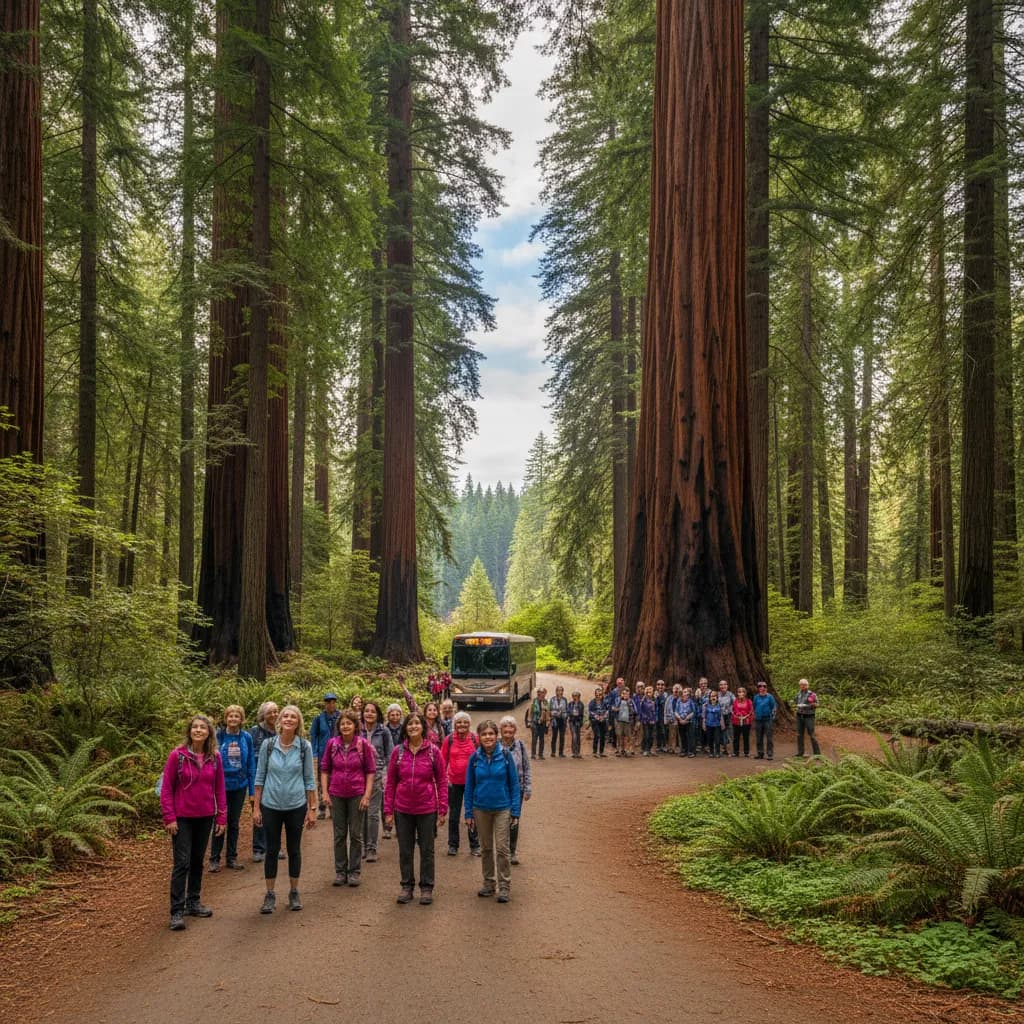
Coast redwoods are the tallest living things on Earth, and no photograph has ever conveyed it. Standing a group at the base of a three-hundred-foot tree does, in about four seconds. A charter bus to the California redwoods is the practical way to do that, because the groves worth visiting are spread across three hundred miles of the north coast and the roads between them are not the kind you want to drive in convoy.
Which redwoods, exactly
There is no single Redwoods State Park. The name covers a chain of parks along the northern coast, jointly managed as Redwood National and State Parks, plus Humboldt Redwoods further south. Knowing which one you are going to matters, because they are hours apart.
- Prairie Creek Redwoods, north of Eureka: the Newton B. Drury Scenic Parkway, easy level trails, and a resident herd of Roosevelt elk in the meadows. The best all-round choice for a group.
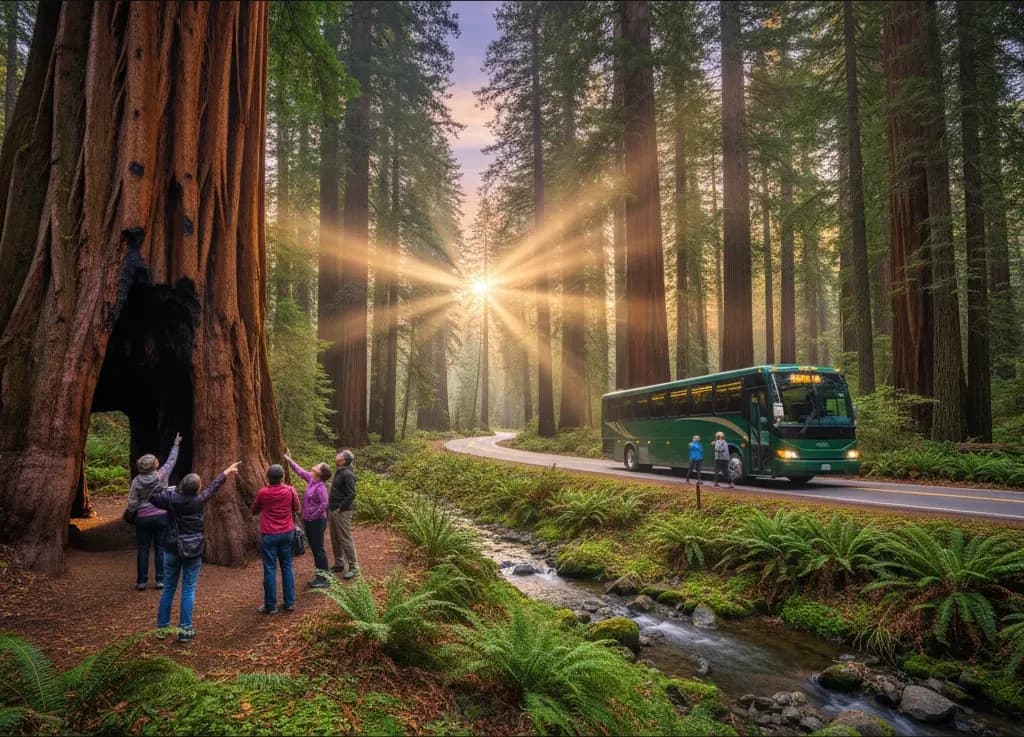
- Humboldt Redwoods, south of Eureka: the Avenue of the Giants, a thirty-one-mile alternative to the freeway that runs directly through old-growth forest. A group can experience it without leaving the vehicle, which suits mixed-mobility parties.
- Jedediah Smith Redwoods, near Crescent City: the densest old growth of all, on the Smith River.
- Del Norte Coast Redwoods: forest running straight down to the ocean, between the other two northern parks.
Where a coach can and cannot go
The Avenue of the Giants and the Drury Parkway both take full-size vehicles and are the reason a coach trip works here at all — the drive itself is the attraction. What does not work is the unpaved access roads. Howland Hill Road at Jedediah Smith is a narrow gravel route unsuitable for large vehicles, and the road to Fern Canyon involves creek crossings that no coach should attempt. Plan those as a separate excursion in a small vehicle or leave them out.
Which charter bus suits a redwoods trip
- Forty to fifty-six: a full-size charter bus handles the highways and both scenic parkways comfortably, and the long drive up the coast is much better on a coach than in a car.
- Twenty to thirty-two: a mini bus reaches the smaller trailhead lots and is the better tool if the itinerary includes the narrower park roads.
- Ten to fourteen: a sprinter van can take on the gravel routes a larger vehicle has to skip.
Getting there
This is the part groups underestimate. From San Francisco to Eureka is about five hours, and to Crescent City closer to seven. Humboldt Redwoods and the Avenue of the Giants sit around four hours north of the Bay Area, which makes them the realistic choice for a two-day trip. We also run pickups from Arcata and Redding for groups already on the north coast.
Highway 101 is the spine of the whole region and there are long gaps between services. An on-board restroom is worth more on this route than on almost any other in California. Anyone searching for charter bus rental near me for a redwoods trip from the Bay Area should price two days rather than one — the drive alone fills a single day and leaves no time under the trees.
How long to allow
From the Bay Area, the redwoods are a two-day trip at minimum and a three-day trip if you want the northern parks. A common and sensible shape is to drive up on day one with the Avenue of the Giants as the afternoon's activity, base overnight near Eureka, then spend day two at Prairie Creek among the elk meadows and the level forest trails before turning south.
Groups already on the north coast have it easier. Eureka to Prairie Creek is under an hour, and Crescent City sits between Jedediah Smith and Del Norte Coast, which puts two of the four parks within twenty minutes.
Whatever the shape, resist filling the schedule. The forest does not reveal itself at walking pace on a timetable — an hour standing in one grove does more than three groves visited in the same time, and it is the single most common piece of feedback we get from groups who have done it both ways.
When to go
May through October gives the most reliable weather, with summer fog that is genuinely part of the experience — the redwoods depend on it, and the light through the canopy on a misty morning is the reason photographers come. Winter is wet, quiet and dramatic, but some park roads close after storms. The forest itself stays green year-round, so there is no bad season, only wetter ones.
Booking the trip
Send your dates, headcount and which groves you want, and tell us whether anyone in the group has limited mobility — that changes which parks we recommend more than anything else. Our event transportation team plans north coast itineraries around daylight and driving hours, both of which are short in winter.
Request an all-in quote with your dates and group size — driver, fuel, tolls and taxes included, usually back the same day.