May 31, 2025 · 4 min read
San Francisco, California
By the Credence Charter Bus team
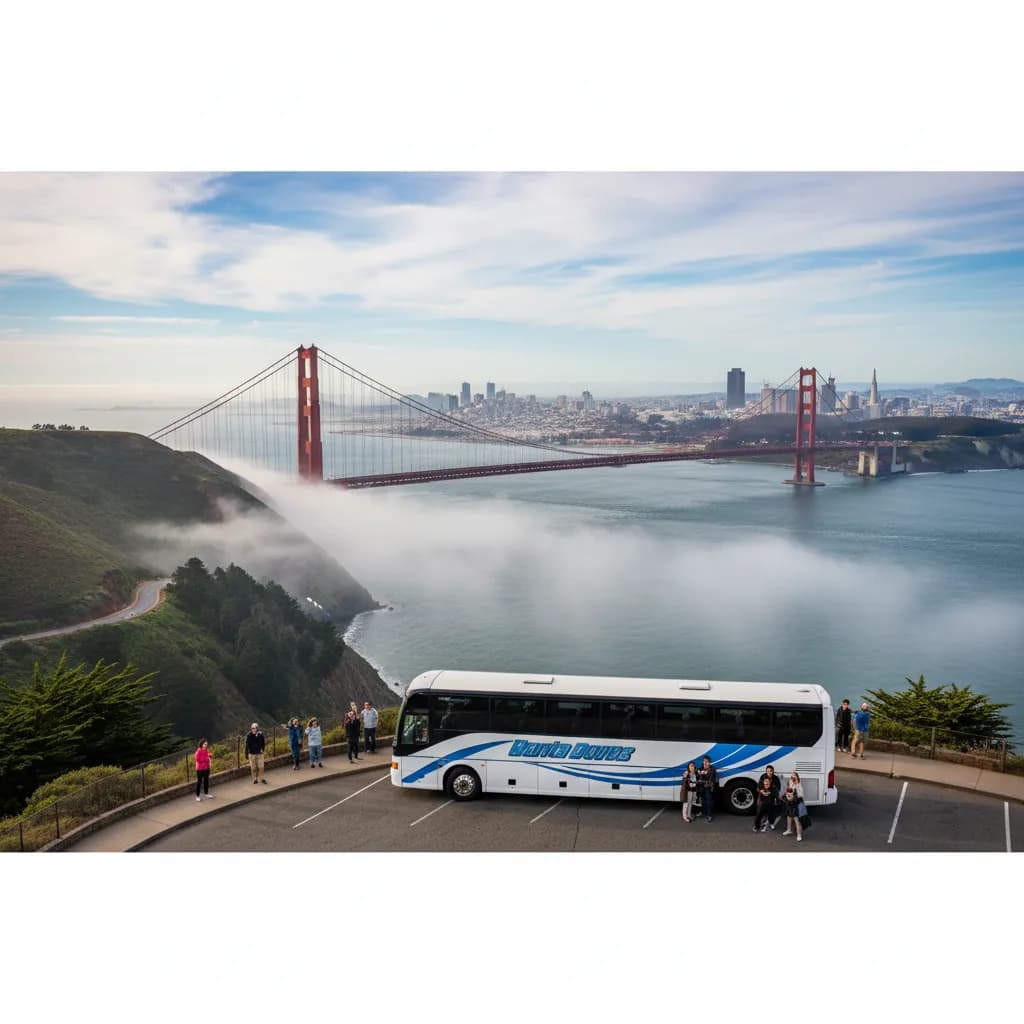
San Francisco is a seven-mile square with some of the most expensive and scarce parking in the country, built on hills that make walking between attractions a bigger commitment than the map suggests. That combination is exactly why a charter bus in San Francisco is worth more here than in most cities: it removes the two problems the city is genuinely bad at, and it delivers a group to the door of each place rather than four blocks and one hill away.
The stops worth a group's time
- Alcatraz Island: ferries leave from Pier 33 and tickets regularly sell out weeks ahead, so book these before anything else in the itinerary. Allow three hours door to door.
- Fisherman's Wharf and Pier 39: the sea lions, the seafood, and a straightforward coach drop-off. Easy to give a group two free hours here.
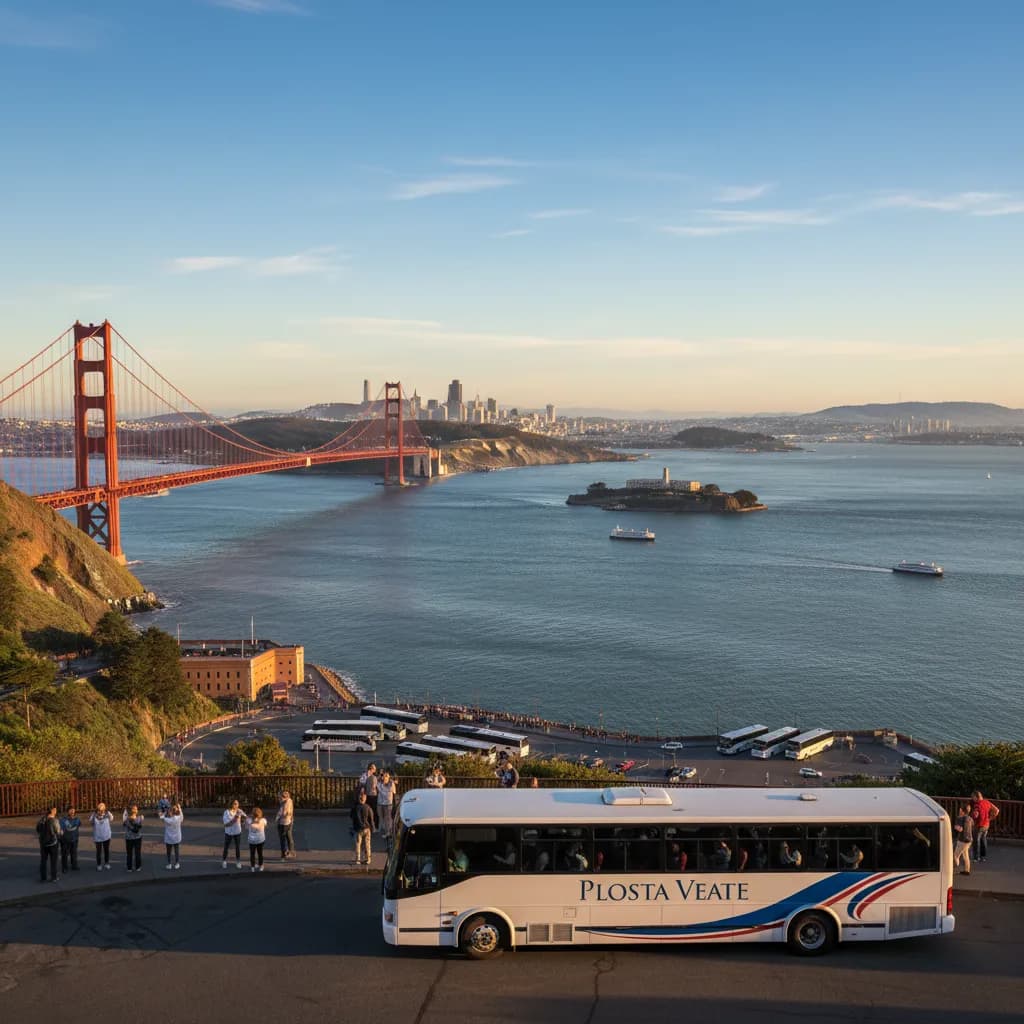
- Golden Gate Bridge: the best group photograph is from the Marin side at the Vista Point, which also has coach parking. Walking the span takes about forty minutes each way.
- Golden Gate Park: the de Young, the Academy of Sciences and the Japanese Tea Garden within walking distance of each other, with room for a bus to wait.
- The Painted Ladies at Alamo Square: five minutes, one photograph, and a stop that costs nothing to add on the way somewhere else.
A cable car ride is worth doing once and is not a group activity — cars hold about sixty people at capacity and lines at the Powell Street turntable run over an hour in summer. Ride it in one direction with a bus meeting you at the other end, rather than trying to move thirty people by cable car.
Which charter bus fits a San Francisco itinerary
Size the vehicle to the streets as much as the headcount. San Francisco has genuine constraints that a rural itinerary does not.
- Forty to fifty-six: a full-size charter bus is right for a conference group or a school trip moving as one unit, and there is coach parking at the major attractions.
- Twenty to thirty-two: a mini bus is the easier vehicle inside the city. It handles the hills, fits hotel loading zones downtown, and reaches neighborhoods a coach has to admire from the main road.
- Ten to fourteen: a sprinter van suits an executive group and parks close to almost anything.
One hard rule: buses are prohibited on the crooked block of Lombard Street. Every group asks, and the answer is a drop-off at the top and a walk down.
Where a bus can actually load
The city has designated tour bus zones near the major attractions, and downtown hotels are used to loading groups from the curb. What does not work is asking a coach to wait on a residential street or to double-park while a group finishes shopping. Build the itinerary as a series of drop-offs and confirmed pickup times, with the vehicle parked properly in between, and the day runs cleanly.
Traffic is the other planning constraint. Crossing the city at five in the afternoon can take three times what it takes at ten in the morning, so schedule the far-flung stop before the rush rather than after it. Groups searching for charter bus rental near me for a Bay Area itinerary should confirm the driver knows the city specifically — San Francisco's loading restrictions are not something a driver can improvise.
Hills, walking and mixed-mobility groups
The gradients are the thing visitors underestimate. Several downtown blocks exceed a twenty percent grade, and a route that looks like a six-block stroll on a map can be a serious climb for part of the group. If anyone in your party has limited mobility, plan the walking legs downhill and let the bus do the uphill work — it is the single most useful piece of San Francisco planning advice there is.
It also changes where you ask the driver to stop. Being dropped at the top of a hill and collected at the bottom costs nothing extra and completely changes how the day feels for anyone who would otherwise be arriving at each stop out of breath.
Day trips worth adding
San Francisco is a good base as well as a destination. Muir Woods and Sausalito make a half day across the bridge; Napa is about ninety minutes for a tasting day; Monterey and the start of Big Sur are around two and a half hours south. Each of those is far more pleasant on one vehicle than in a convoy, and the drive is where a group actually talks to each other.
When to visit
September and October are the city's warmest, clearest months, which surprises visitors who assume summer. June through August brings the fog that sits over the western half of the city until early afternoon, so plan Golden Gate viewpoints for later in the day in those months. Winter is mild, wet in stretches, and much quieter.
Booking the trip
Send the dates, the headcount, the hotel and the stops you have in mind, including the Alcatraz sailing time if you already hold tickets — that one fixed point usually determines the shape of the whole day. Our corporate travel team handles conference and offsite movements around Moscone and the downtown hotels, and we cover pickups from San Francisco, Oakland and San Jose.
Request an all-in quote and you will usually have an itemized price back the same day, driver, fuel, tolls and taxes included.